In this post, I want to share the essential keys to help you stand out when applying for jobs as a graphic designer or even as a web developer—so you can truly be the best of the best.
After reviewing hundreds of resumes and portfolios from graphic designers and web developers, I can honestly say I’ve seen it all. And I mean all!
If you’re curious about how a design studio views the countless applications we receive, this post is for you.
That’s why I’m dedicating this article to giving you a few tips to ensure that, when you apply for a job as a graphic designer, you’re among the top candidates.
My goal here is to motivate every reader to improve—because ultimately, it’s up to you to grow both professionally and personally.
Let’s get started!
The 6 keys to getting hired as a graphic designer or developer—pro tip of the day
1. Craft an outstanding resume
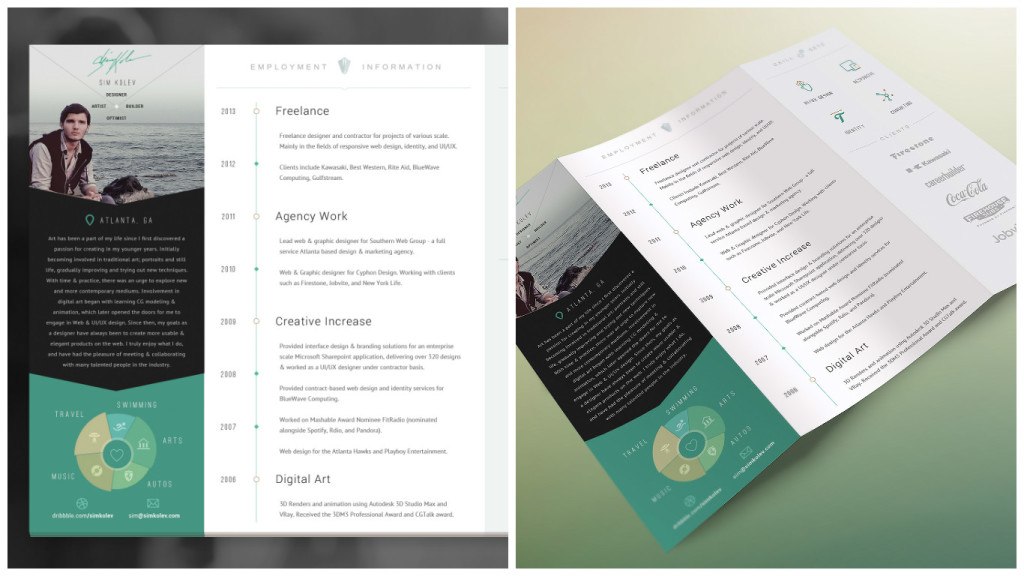
The first and most important key: your resume.
If you’re a graphic designer, your resume needs to be exceptional.
A Word document just won’t cut it. As surprising as it may sound, we’ve received more than a few resumes created in Word and exported to PDF.
That might be fine if you’re applying for an office job, a legal position, or a financial advisor role.
But if you’re applying as a graphic designer, it’s a dealbreaker. So if this is you, don’t take it personally—just start working on a new, standout resume right now.
Here’s an inspiration post where you’ll find amazing resume ideas.
I’m sure, as a designer, you’re more than capable of creating a great resume using Adobe Illustrator or InDesign. Open it up, take your time, and don’t send out another resume until it’s truly exceptional.
Seriously—don’t keep reading until you’ve done this. Done? Great, let’s move on!
If you’re a web developer without much design experience, I recommend learning the basics of the most common design tools and creating a resume that stands out.
It’s true that design isn’t your main job as a developer, but this is a competition to see who’s the best. If you can show some design skills, you’ll have a big advantage over other developers who don’t.
P.S. This is a bit off-topic, but make sure the most important information is at the top of your resume.
2. An online portfolio is a must

While most people manage to put together a resume, far fewer have an online portfolio.
There are plenty of excuses for not having one:
- I already have a resume—why do I need a portfolio?
- I can’t afford hosting and a domain
- I don’t have any work to show
- It’s not that important
Since these are just excuses, let’s break them down one by one.
I already have a resume—why do I need a portfolio?
You need a portfolio because a design studio looking to hire you wants to see real examples of your work.
You need a portfolio because your competition has one.
And sometimes, your portfolio is even more important than your resume!
I can’t afford hosting and a domain
I get it. But in today’s world, you have thousands of free options.
Set up a Behance profile, learn a bit of WordPress—whatever it takes, just get your portfolio online.
If you’re a developer, this is even more important. In your case, I’d seriously consider investing in a cheap hosting plan and domain so you can showcase your programming and front-end skills.
I don’t have any work to show
If you don’t have client work to display, use projects you created while studying graphic design or web development.
Sure, they’re not real client projects, but at least they show your potential.
Other ways to boost your portfolio:
- Create a semi-real project—design a logo for your aunt, use a mockup for business cards and make them look as realistic as possible. Some might say, “But that’s not a real project, it’s fake!” If you feel uncomfortable, just add a small note saying, “This is a simulated project.”
- Find a nonprofit to collaborate with. You’ll build your portfolio and support a good cause. Win-win.
- If you have friends in design or development, offer to help them out. Some might say, “I’m not a slave!” No, you’re someone who needs work and a bigger portfolio—remember, you said you didn’t have anything to show.
It’s not that important
Yes, it is.
3. Practice creativity every day
Browse blogs, join design communities, visit programming websites, and stay up to date with the latest trends and technologies.
Check out sites that curate cutting-edge web designs, logos, business cards, and more.
Here are a few posts you might find useful:
Don’t stand still—stay curious and try new techniques, even if it’s just for yourself and not for real projects.
4. Never stop learning
This is especially crucial for web developers.
If you’re a web developer, you need to accept that dedicating a good chunk of your time to ongoing learning is essential.
As a developer myself, there hasn’t been a single week where I haven’t learned something new—whether through new projects or self-driven research.
If you’re a designer, don’t underestimate the importance of learning new techniques either.
There are plenty of places to learn graphic design online, right from your screen.
Domestika is one of them, and it’s the one I always recommend. They have some fantastic graphic design courses—definitely check them out.
5. If you’re a graphic designer…
Learn HTML and CSS. A designer who can code layouts for the web is a game-changer.
If you also know how to program front-end with JavaScript and/or jQuery, you’re practically a superstar.
And if you can code beyond that, well—you’ve basically beaten the game. Trust me, you won’t have trouble finding work.
6. If you’re a web developer…
Learn some design—or at the very least, develop a keen eye for detail. I’ve worked with plenty of developers and designers.
Designers often complain that developers are sloppy and don’t pay attention to detail (hey, if you do pay attention to detail, don’t take offense—you’re the exception, and that’s why you’ll stand out).
Developers, on the other hand, complain that designers are nitpicky and demanding.
The reality is, as a team of designers and developers, it’s up to you—developers—to adapt to the designers’ requirements. That icon being 10px too low really does matter. It’s the difference between a good design and a bad one.
Remember, you can send us your CV/portfolio to work with us
If you’re looking for a job as a developer or designer, we’re always open to receiving resumes.
Here’s the link to send us yours.
In summary
As you can see, I’ve given you plenty of things to work on.
Here’s a quick recap for those who want the highlights (or just want the shortcut):
- Create a killer resume—be the best out there
- Build your online portfolio, whether it’s on Behance or another free platform
- Work on your creativity—join design blogs and communities, visit sites about web development, and practice
- Keep learning. Never stop picking up new techniques, whether you’re a designer or a developer
- If you’re a graphic designer, learn some coding and/or layout skills
- If you’re a web developer, pay close attention to detail to faithfully reproduce the designer’s vision