In this post, we’re diving into the top email marketing trends for 2020. If you want to know which new strategies will stand out this year, you’re in the right place.
As usual, with the end of the last quarter, the team at Code Barcelona is already looking ahead. We want to stay ahead of the curve—and help our readers do the same.
Today, we’ll explore the key email marketing trends to watch in 2020. By now, there’s no need to explain what email marketing is, but just in case: email marketing is, quite simply, marketing via email (surprise!). It’s all about sending regular emails to your contacts to promote your brand or deliver value to your audience.
A bit of background: email marketing has been around almost as long as the internet itself. The first ever email marketing campaign was sent by Gary Thuerk in 1978 to 400 people, promoting his company’s computers. The result? $13 million in sales.

Those glory days—when open rates were sky-high and promotional emails were a novelty—are long gone.
Now, you have to work for your results. So, to help your campaigns achieve the success you’re aiming for, let’s talk about the email marketing trends that will define 2020.
Email Marketing Trends for 2020: All You Need to Know
Artificial Intelligence, Machine Learning & Automation

If there’s one thing you keep hearing about in tech, it’s artificial intelligence and machine learning.
In a nutshell, artificial intelligence (AI) is about simulating human intelligence in machines or computers. This includes learning and self-correction—machine learning—based on external feedback.
AI can be divided into two main categories: weak and strong. Weak AI refers to applications or software designed for specific tasks—think virtual assistants like Siri. Strong AI, or “general intelligence,” is about creating systems that can replicate human cognitive abilities. This type of AI can solve new problems without human help.
Now that we’ve covered the basics of AI and machine learning, let’s look at how these technologies can be applied to email marketing.
If you think creatively, it’s clear: the more personalized your emails, the higher the engagement. That means better results. By leveraging AI and machine learning, you can connect with your users on a much deeper level—tailoring content and copy for each individual.
By testing different types of copy, you can segment your users and learn how each prefers to receive content. And here’s a key point: you can even determine the best times and days for each user to receive your emails.
How and When to Apply This Trend in Email Marketing
Just imagine the range of parameters you can incorporate with this technology. You’ll be able to determine:
- The style of copy that resonates with each user—informal, formal, etc. This applies to both the email body and subject line.
- The ideal text length for each user.
- The types of images that work best for each user.
- The content categories each user is most likely to engage with.
- The optimal times for each user to receive emails.
Mobile-First Focus

The stats are clear: checking email on smartphones is more popular than ever. If your email marketing campaigns aren’t designed to display perfectly on mobile devices, you’re missing out.
In 2019, 60% of email marketing campaigns were opened on mobile devices, compared to just 10% on desktop and 29% on webmail clients!
This makes it essential to consider how your emails look on mobile. Ideally, you should use responsive design so your emails look great on any screen. If you don’t want to build a fully responsive version, at the very least, create a mobile-specific format. Why? Because a desktop can display a mobile-optimized email just fine—but not the other way around.
How and When to Apply It
- If you use email marketing software with templates, make sure to choose a responsive template.
- If you’ve been using the same template for years, it’s probably time for an update. Create a new template that’s responsive or designed specifically for mobile.
Examples of Emails Using This Trend
Responsive Email Marketing, Inspiration 1
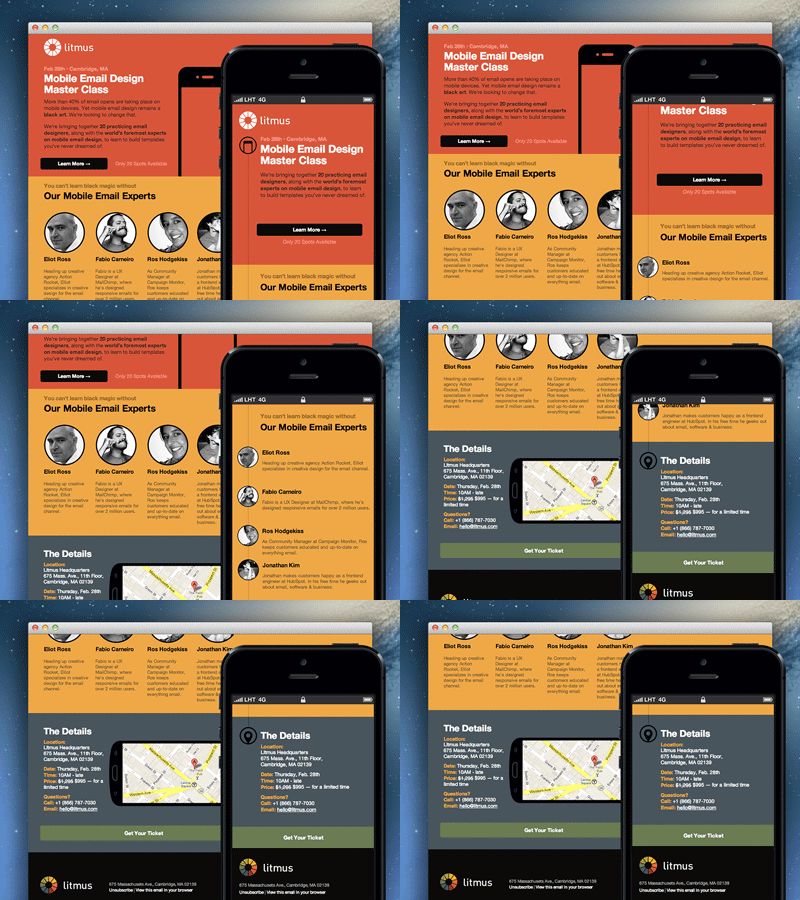
Here’s a great example of a responsive email. The desktop version is in the background, with the mobile version in front.
Responsive Email Marketing, Inspiration 2
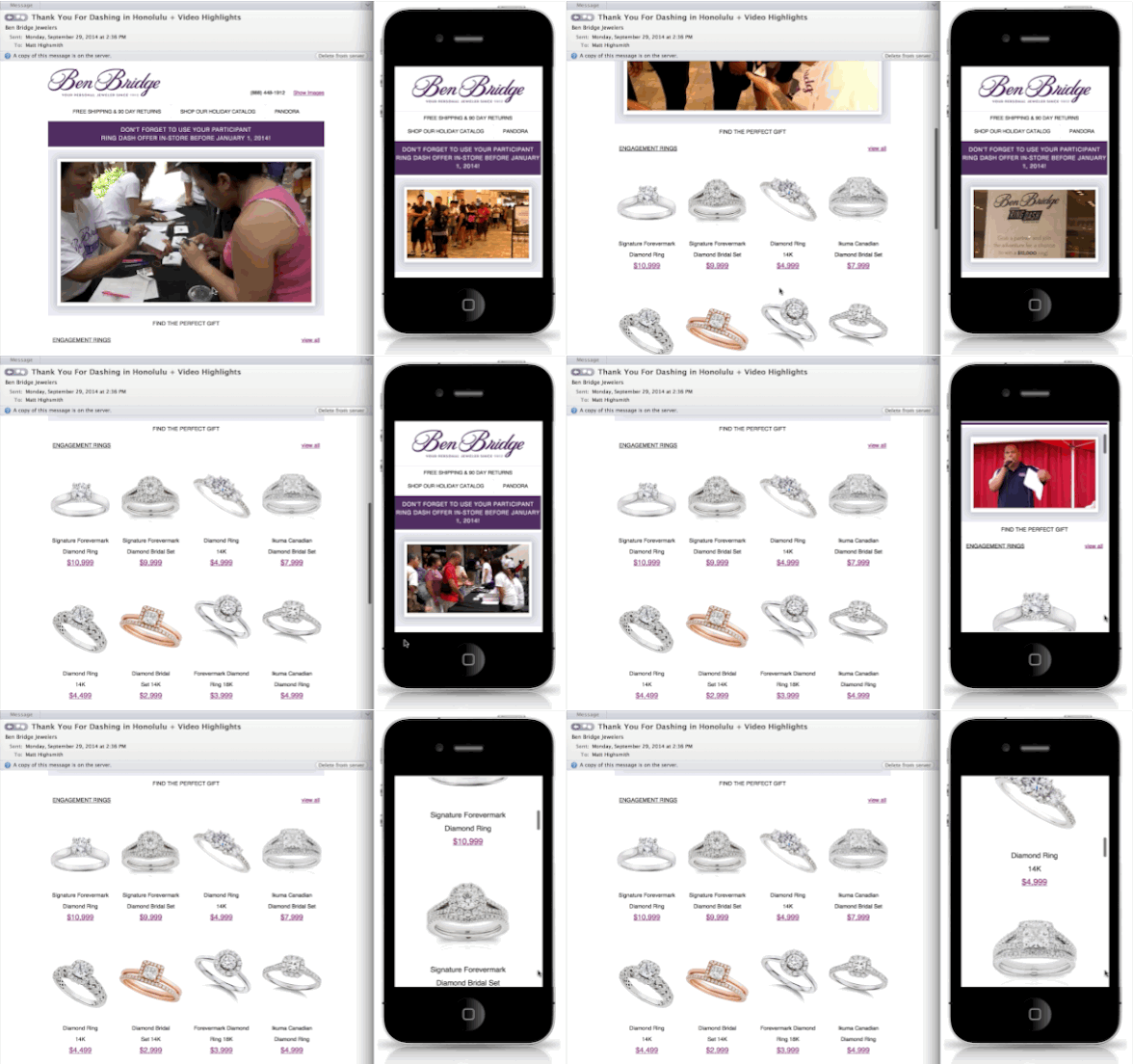
As in the previous example, you can see both the desktop and responsive versions.
This email also uses a gif as an interactive element—another trend we’ll discuss later.
Responsive Email Marketing, Inspiration 3
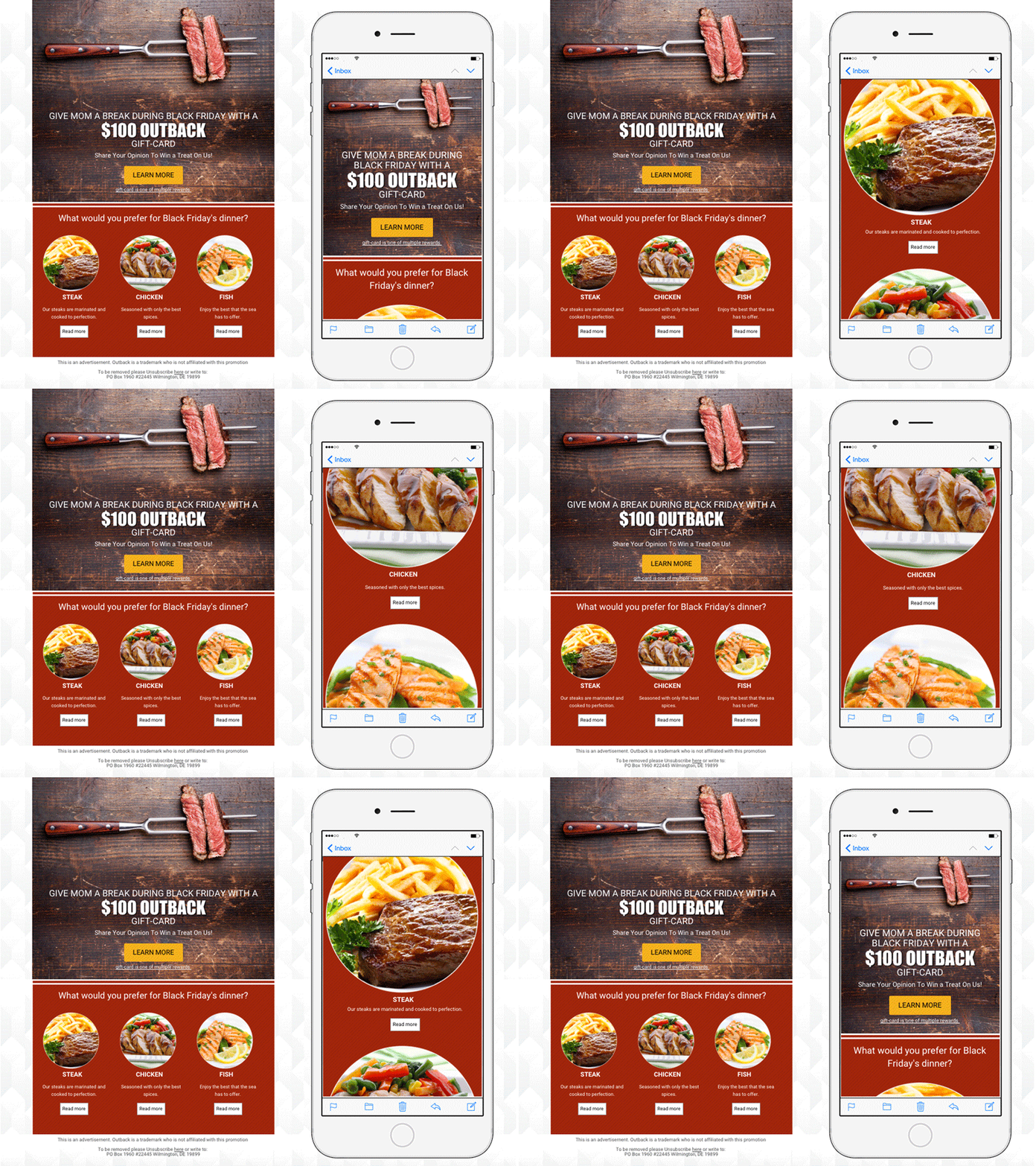
The last example focuses on the mobile experience.
Emails That Talk

The rise of smartphones, voice recognition, and virtual assistants like Siri and Alexa is gradually changing how we interact with the internet.
More and more smartphone users are using voice commands. Personally, I use them for simple tasks like calling someone, playing a playlist, turning the volume up, switching on the flashlight, and other routine actions.
But here’s what’s new: Alexa, Amazon’s virtual assistant, can now read the body of emails aloud. This is a game-changer for email marketing.
We now need to think about creating content that fits this new paradigm—shorter, more concise text with a personal touch that connects with the user.
How to Apply It
- Focus on writing concise, direct copy.
- Use a conversational tone that connects with the reader.
- Pay attention to how your text sounds when read aloud.
- Test your emails with different virtual assistants that support email reading.
Interactive Content

One of the main ways to make your email marketing campaigns stand out is through eye-catching design. There are many ways to do this, but one of the most effective is using interactive elements like gif images.
By adding gifs to bring your email design to life, you’ll grab your audience’s attention and make a strong impact. Of course, this should always be paired with great design.
If you use this trend in 2020, you can expect a significant boost in click-through rates and move users one step closer to conversion.
How and When to Apply This Trend in Email Marketing
Use this trend in emails where you want to:
- Make a big impact and maximize clicks
- Showcase a product in a new way, for example, by displaying different angles
- Increase ecommerce sales by highlighting various products—just like using a slider on a website
Examples of Emails Using This Trend
Interactive Email Marketing, Inspiration 1
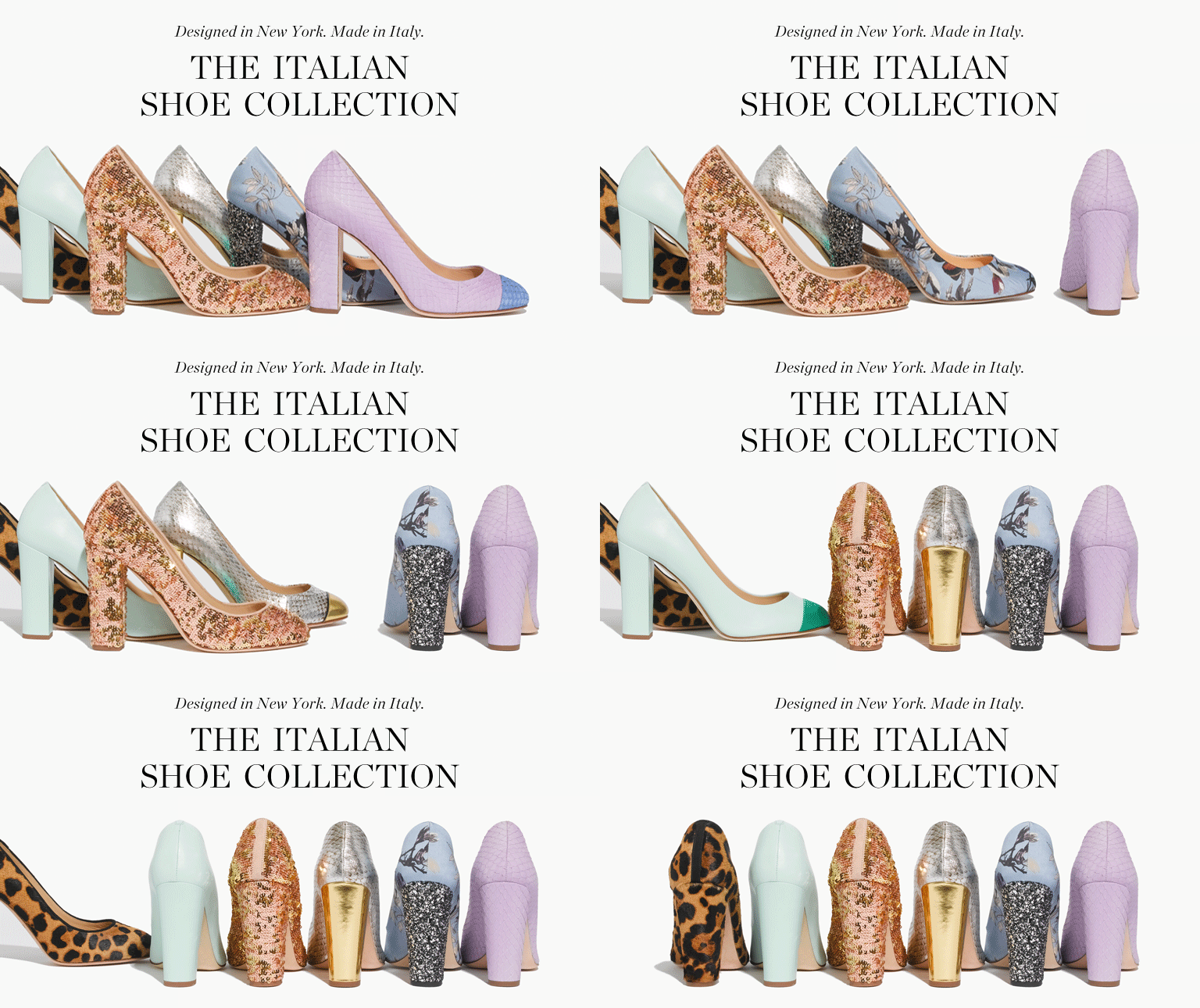
Here’s a creative animation showing how to put on shoes. It’s visually striking and grabs attention.
Interactive Email Marketing, Inspiration 2
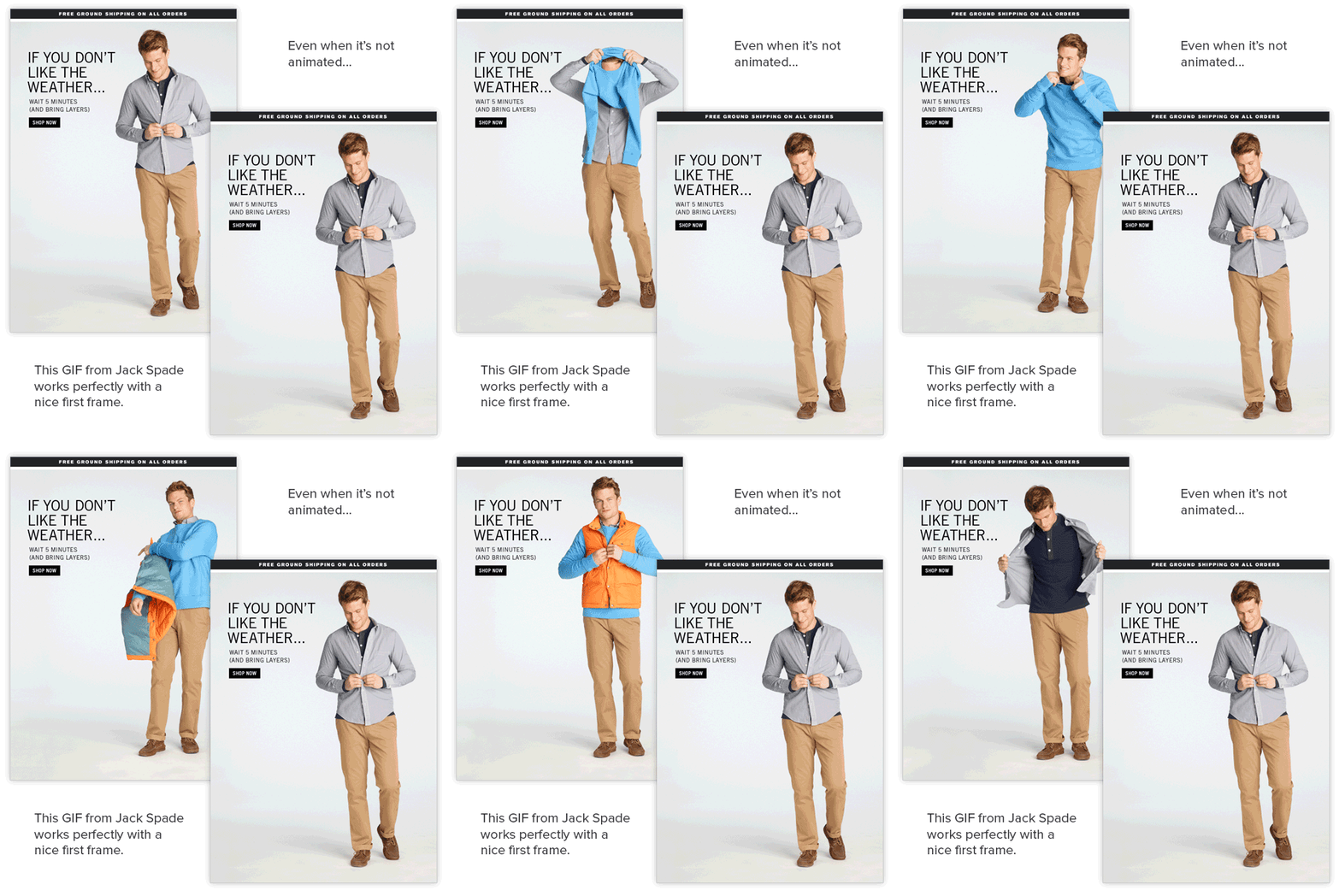
This example features different clothing items in an animated format—perfect for promoting an ecommerce store.
Interactive Email Marketing, Inspiration 3
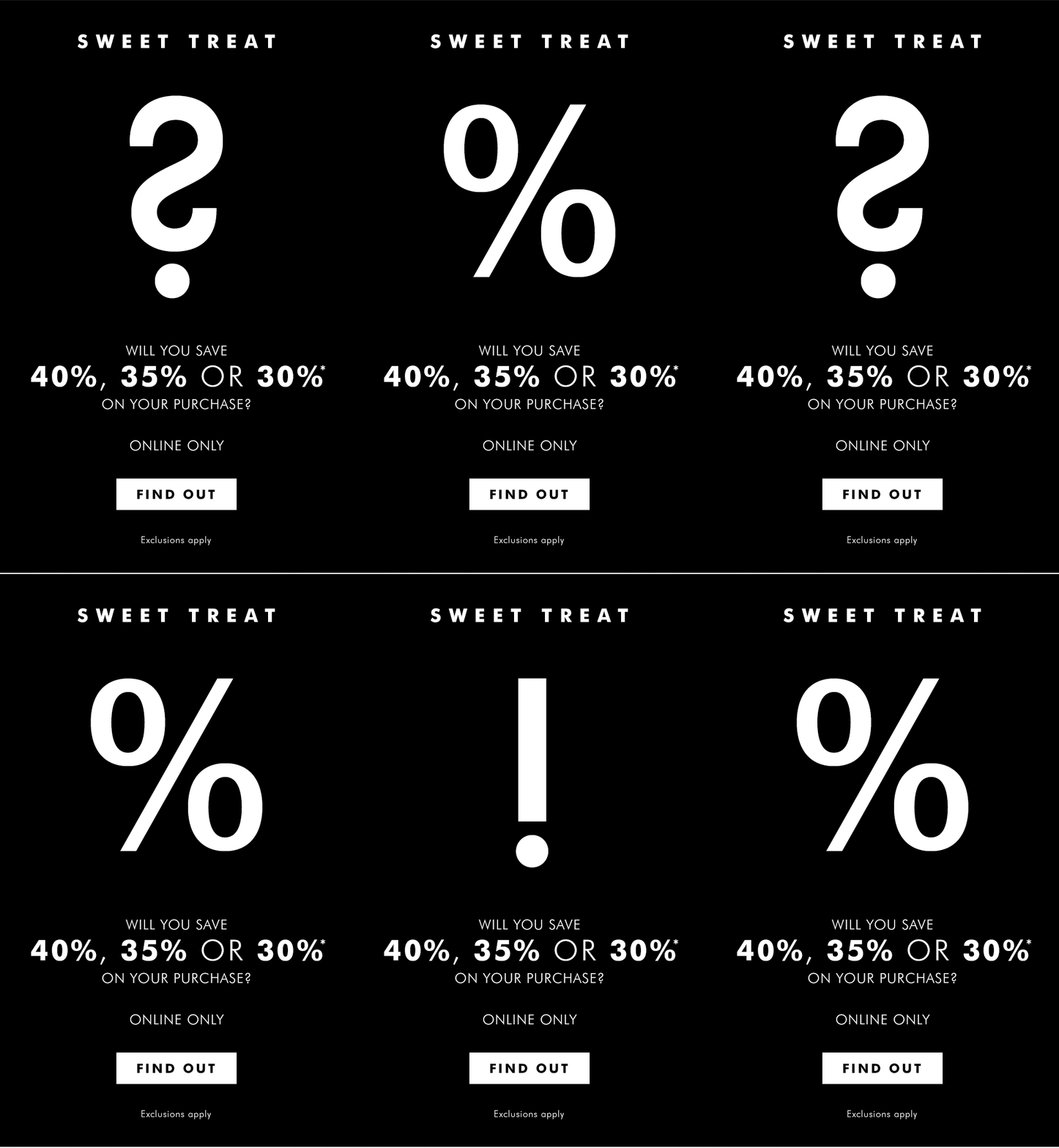
Super visual, minimalist, and straight to the point. With an email like this, it’s impossible not to stop and take notice.
Less Is More
As we mentioned earlier, email marketing needs to be mobile-focused, so staying on trend in 2020 means using much shorter, more concise, and direct copy.
It’s not just about whether users open your email on mobile—it’s about the concept itself. Micro-content has become increasingly important in recent years, and it’s something you can’t ignore in any advertising medium. Most users aren’t willing to read long texts right away. If you want them to engage with longer content, you first need to win them over and build engagement.
As for design, flat design and minimalism have been the standard for years now. And it’s not just a matter of taste—it’s about practicality.
In short: communicate as much as possible with as few elements as possible.
How and When to Apply This Trend in Email Marketing
To sum up:
- Use transparent images of specific products
- Stick to flat colors and avoid textured backgrounds
- Keep text to a minimum—make it clear and straight to the point
- Give special attention to your call to action
- Create contrast between large and small text
Examples of Emails Using This Trend
Minimalist Email Marketing, Inspiration 1
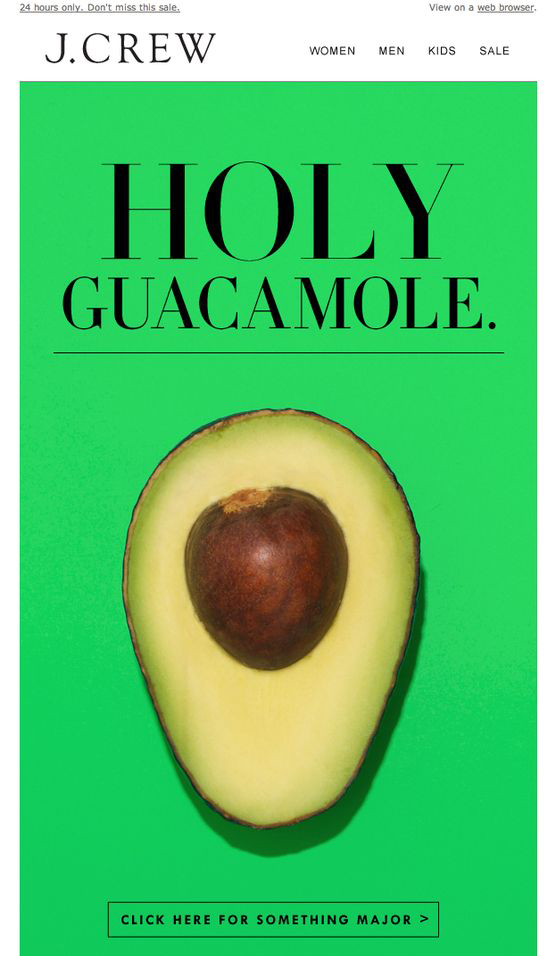
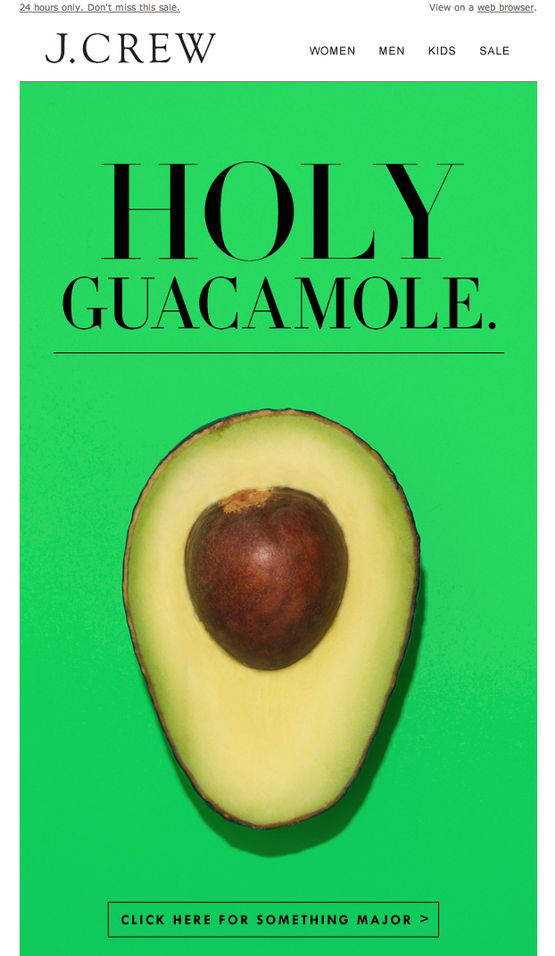
This email uses minimalism to highlight the visuals, ending with a call to action that stands out thanks to the minimal text.
Minimalist Email Marketing, Inspiration 2
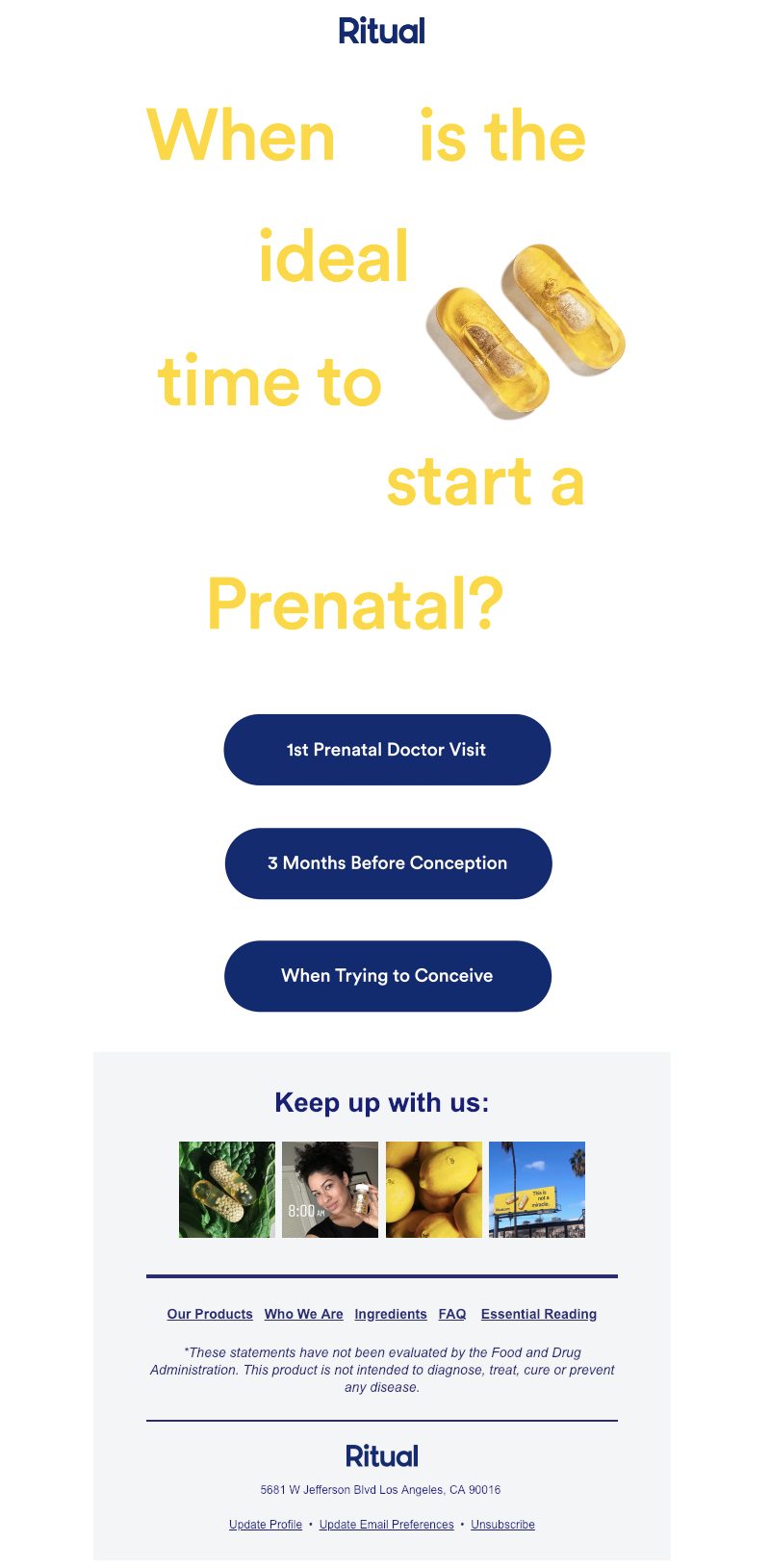
Here, the combination of imagery and typography creates a very minimalist design. There are three calls to action and a footer, which in my opinion detracts from the design, but from a marketing perspective, it can be a tempting spot for a last-minute click.
Minimalist Email Marketing, Inspiration 3

In this case, you can see both minimalism and the use of gifs. I’m sure you’ll agree—the visuals here are top-notch.
Conclusions & TL;DR
As you’ve seen, this is a highly visual post, exploring not just design trends but also innovative aspects like artificial intelligence and its application in email campaigns.
Here’s a quick summary for the skimmers:
- Start exploring how AI and machine learning can enhance your email campaigns.
- Focus on mobile—make sure your emails look great on mobile platforms. In fact, prioritize mobile over desktop.
- Use interactive content, like gifs, to make an impact and boost click-through rates.
- Cut down on text and use minimalist imagery. Get straight to the point.
About This Post
This year, we decided to take a different approach to our annual online marketing trends post. For each trend, we’ve included practical tips for implementation and three inspirational examples where you can see these email marketing trends in action. Our goal is to give you a broader range of ideas to spark your creativity.
Disclaimer
We often hear comments like, “But this trend was already being used last year and the year before.” And yes, some trends have been around for a while and will continue to be relevant for years to come. If you’re already deep in the marketing world, you might be familiar with some of these. But for those new to online marketing, knowing the key players and resources in email marketing can be incredibly useful.