Today we want to talk about the importance of using optimized images in your web design.
This is a crucial aspect when defining the design of a website, as it directly impacts key factors such as loading speed and the potential penalties you might face from clients, users, and even Google itself.
So, if you’re considering reaching out to us for your new website, here are a few tips to help you get the best balance between image quality and file size.
1. How to optimize images without losing quality in your web design
This is the bare minimum you should do—even if you skip everything else on this list, don’t skip this step. Use a tool like ImageOptim for OS X or FileOptimizer for Windows and Linux to automate image optimization.
All you need to do is drag and drop your images into the app—no extra effort required.
It’s a fast, effortless process that delivers optimized images every time.
2. Use the right size
Using images with incorrect dimensions is a common mistake, but it can have serious consequences.
Often, we assume that if an image looks fine on screen, everything is okay. In reality, your browser might be loading a much larger image and simply displaying it smaller, which means unnecessary load time.
Make sure your images are exactly the same size as the space they’ll occupy—no more, no less.
3. Save for web
If you’re experienced in web design, you’re probably already familiar with this option. When used correctly, it can save you a lot of time in your workflow.
Simply save your images in a web-optimized format as you work on your web design.
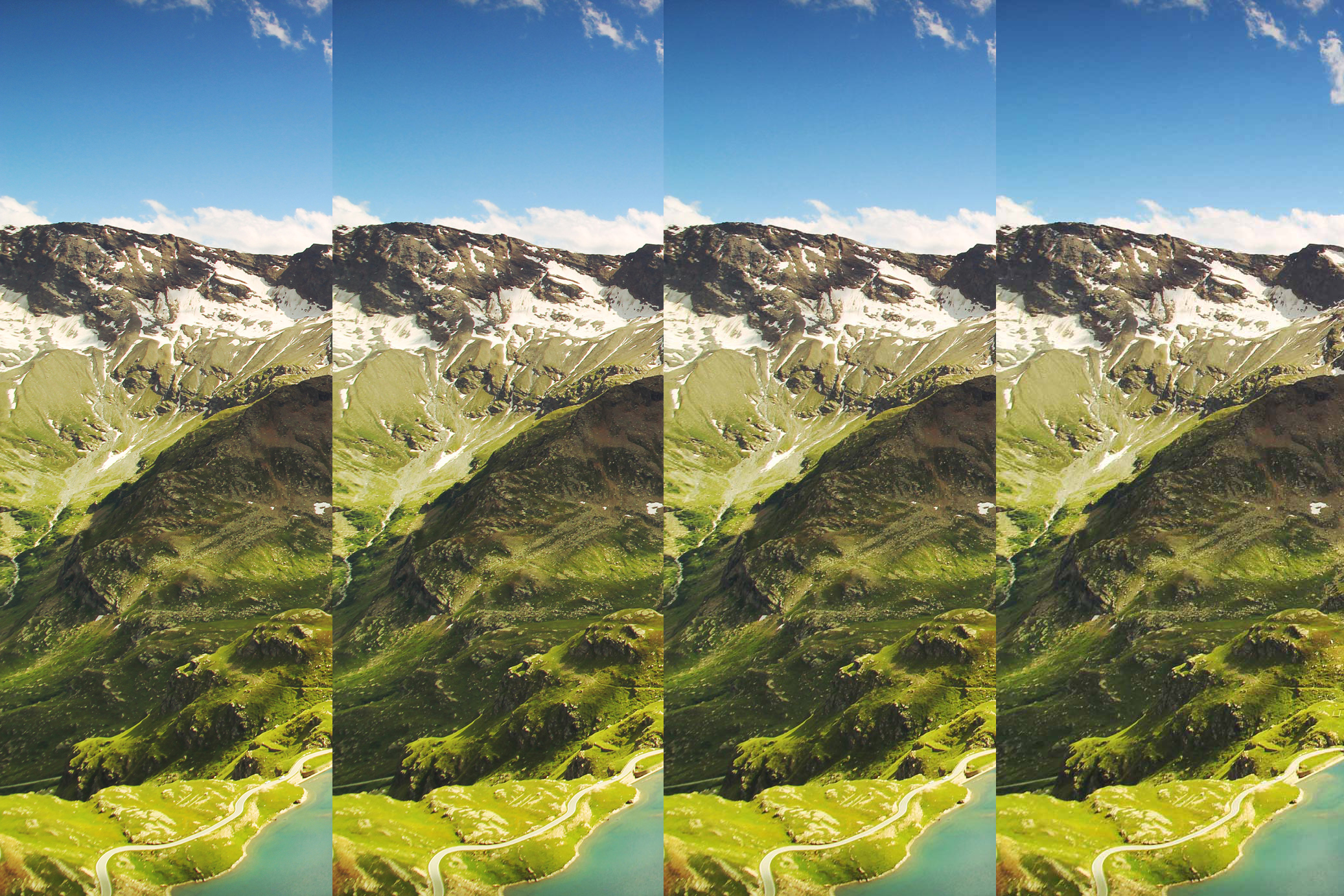
Here’s a comparison: from right to left, you’ll see images saved for web at 100%, 70%, 50%, and 20% quality. Depending on the original size, the differences will be noticeable.
There are plenty of theories about the ideal quality percentage, but the best approach is to trust your instincts—experiment, save, zoom in, compare… whatever it takes. It’s a great way to train your eye and achieve the perfect result.
4. Do I really need these images in my web design?
This is an important question, and one of several that should be part of your web project analysis. Good web design starts with a needs assessment—it’s not about adding as many images as possible, but about understanding which ones are truly necessary.
5. Use the right format
There are several image formats, each with its own strengths and weaknesses.
It’s important to understand them so you can use each one appropriately.
If you have any questions, feel free to call our studio in Barcelona—we’re happy to help with anything you need.