Kulturhavna: a living identity transforming urban space through participatory design
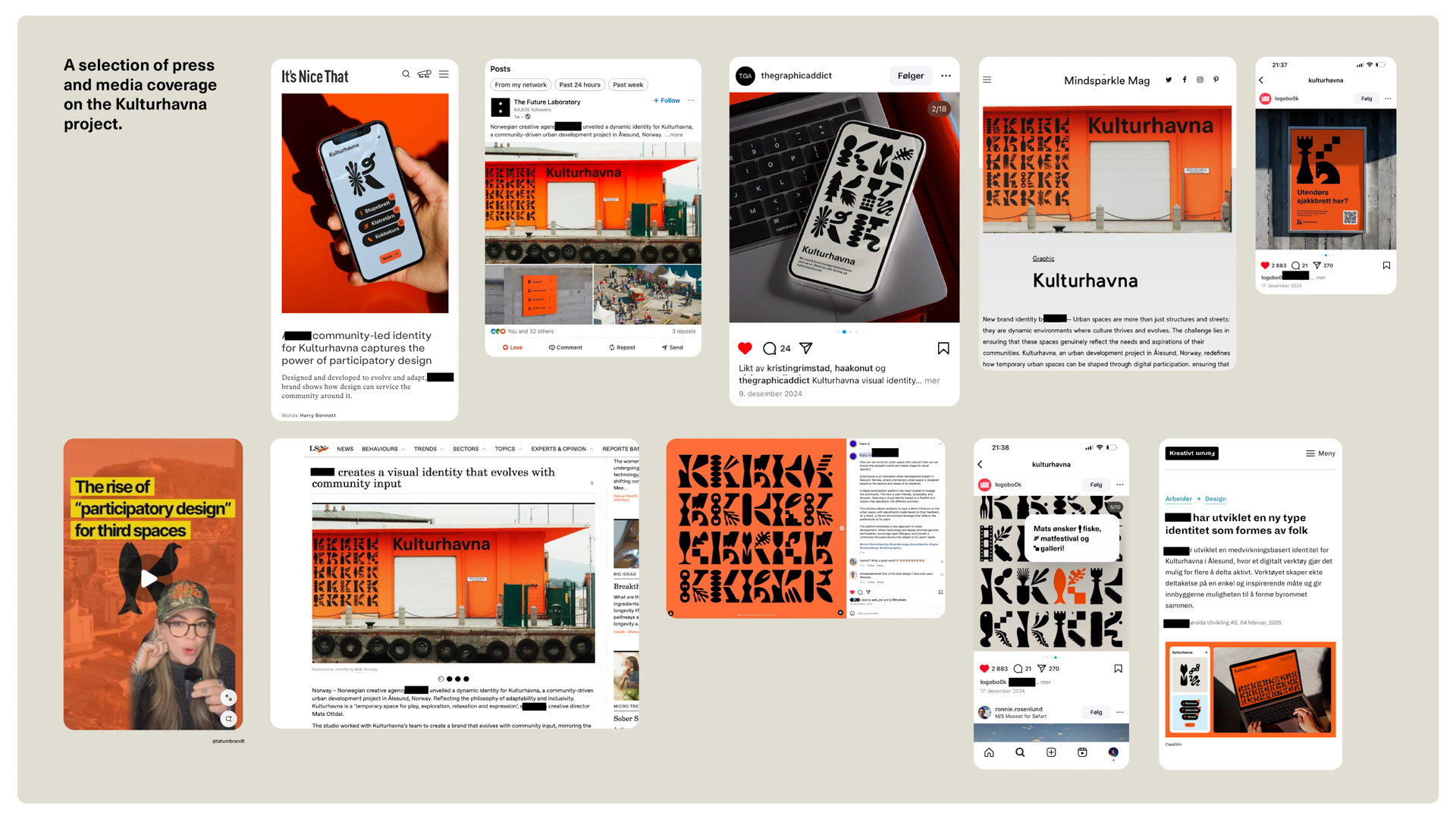
Some graphic design projects simply create a visual identity. And then there are the rare few, like Kulturhavna, that build an identity which lives, breathes, and evolves with its community. Developed by Anti (Norway) and winner of the European Design Awards 2025 – Gold in the Brand Logo category, this project redefines what a brand can be in today’s public spaces.
From our perspective as a communication and graphic design agency in Barcelona specializing in branding, web design, and visual identity, Kulturhavna is a masterclass in innovation. It proves that design can be flexible, dynamic, participatory, and deeply human—a benchmark for rethinking how we create brands for institutions, neighborhoods, cultural projects, and participatory processes.
A temporary urban space shaped by its own residents
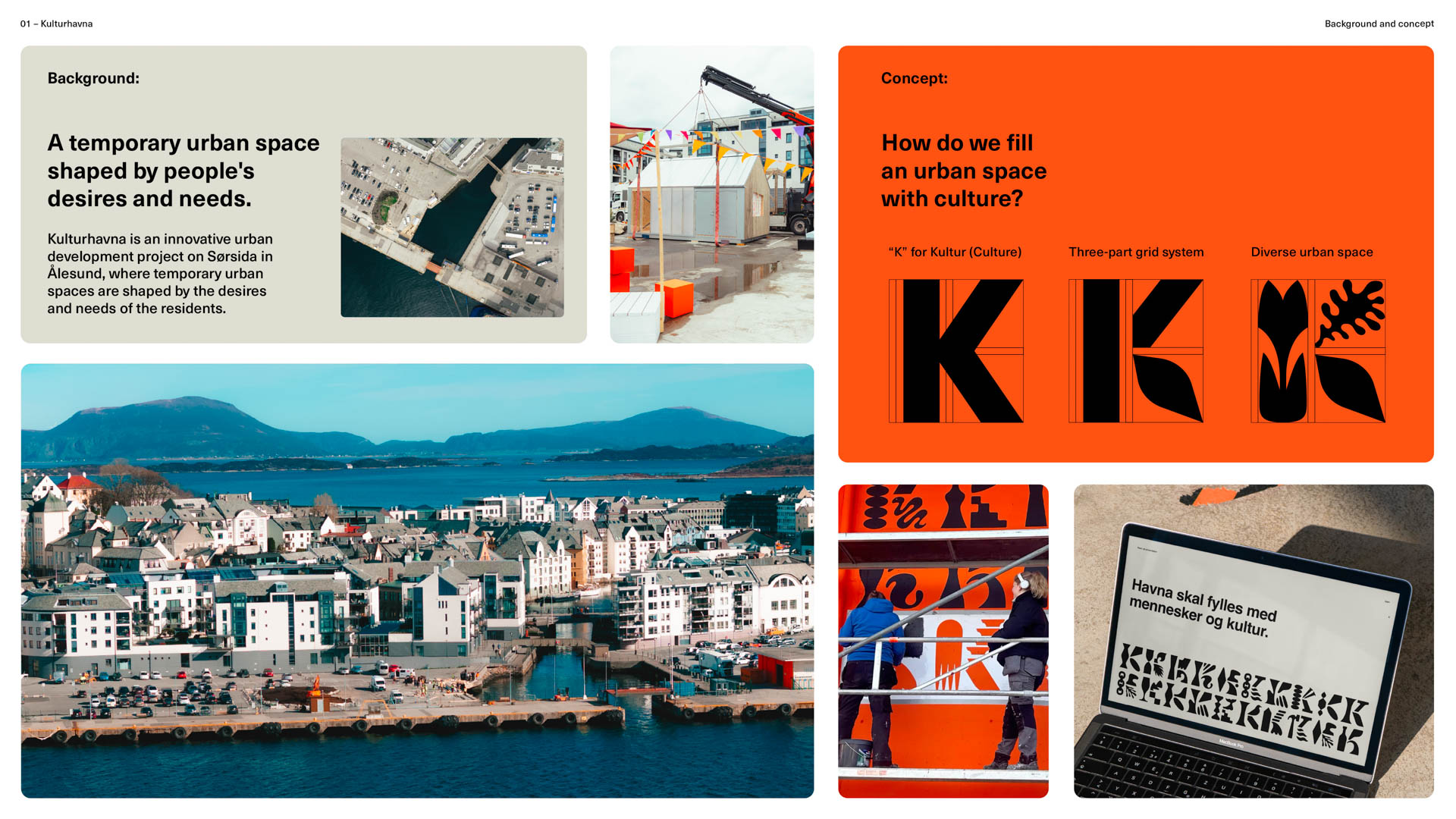
Kulturhavna—“Culture Harbor”—is a temporary urban development project in Ålesund, Norway. The question at its core is as simple as it is radical: How do we fill an urban space with culture? And, even more importantly, how can that culture shape its visual identity?
Instead of designing a static logo or a rigid brand manual, Anti decided the identity should reflect exactly what happens in the space: a place in constant flux, defined by the needs, wishes, and contributions of its users. The result is a modular, evolving identity—a graphic system open to interpretation and citizen participation.
The “K” as a vessel for culture
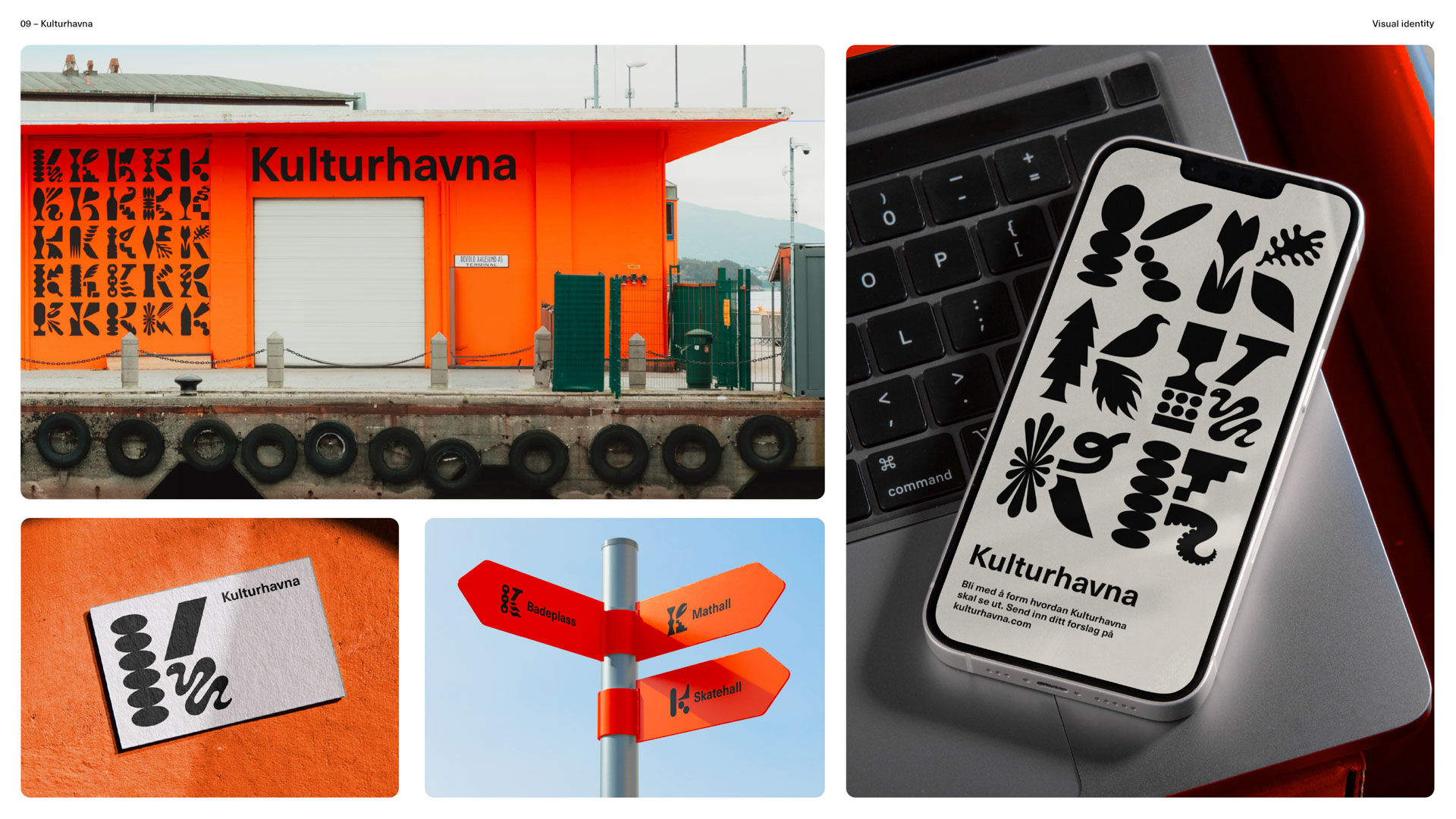
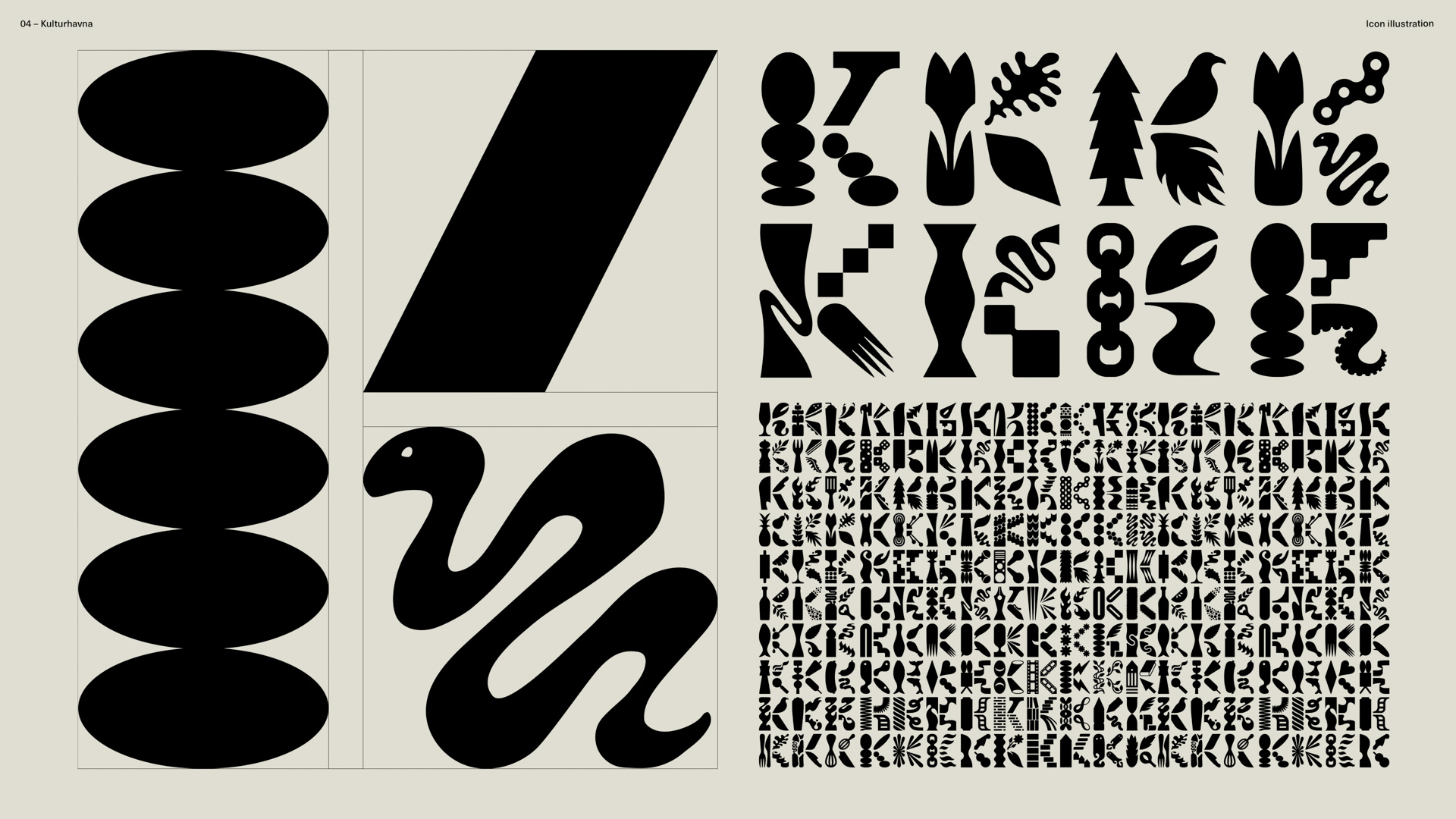
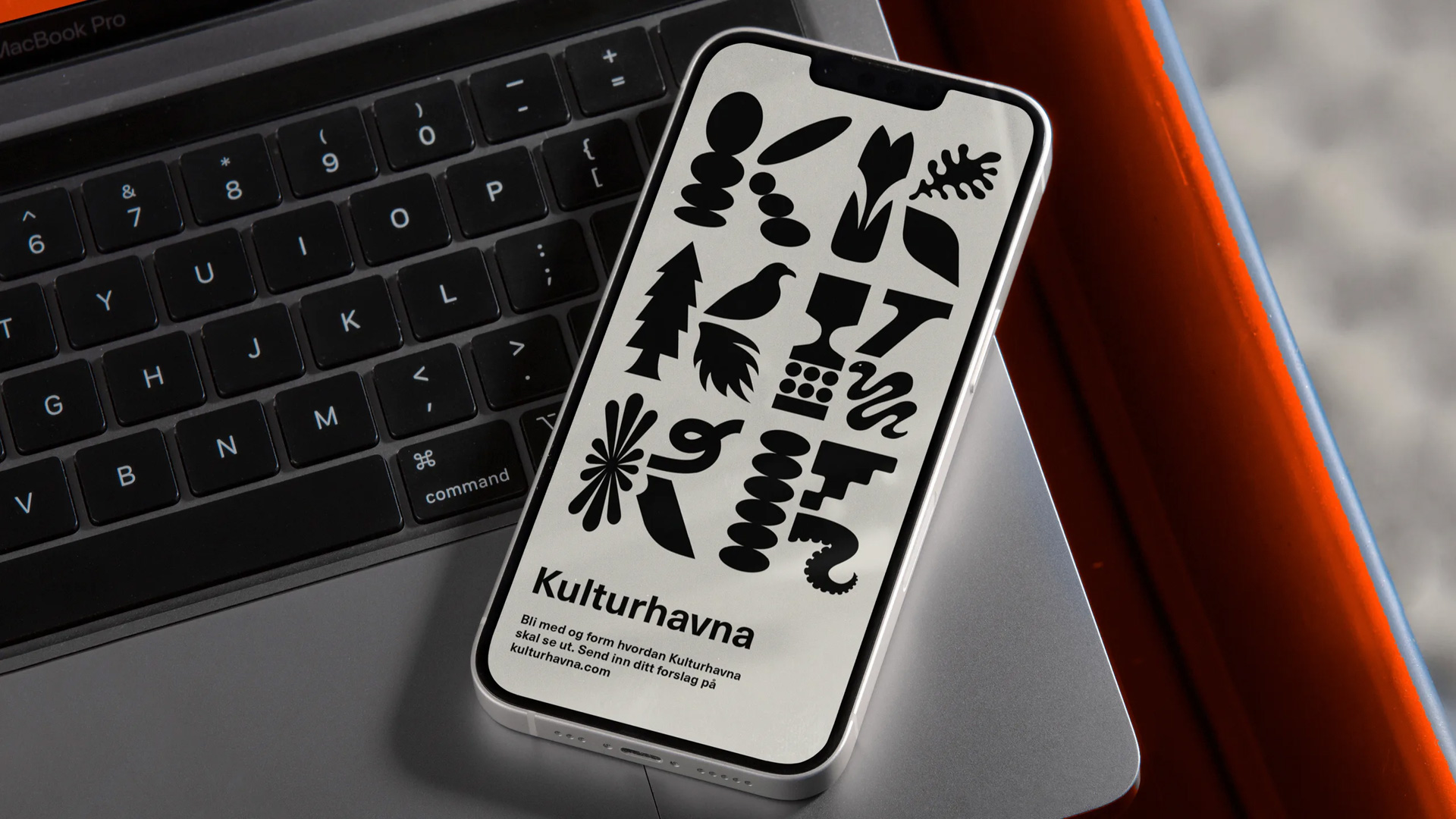
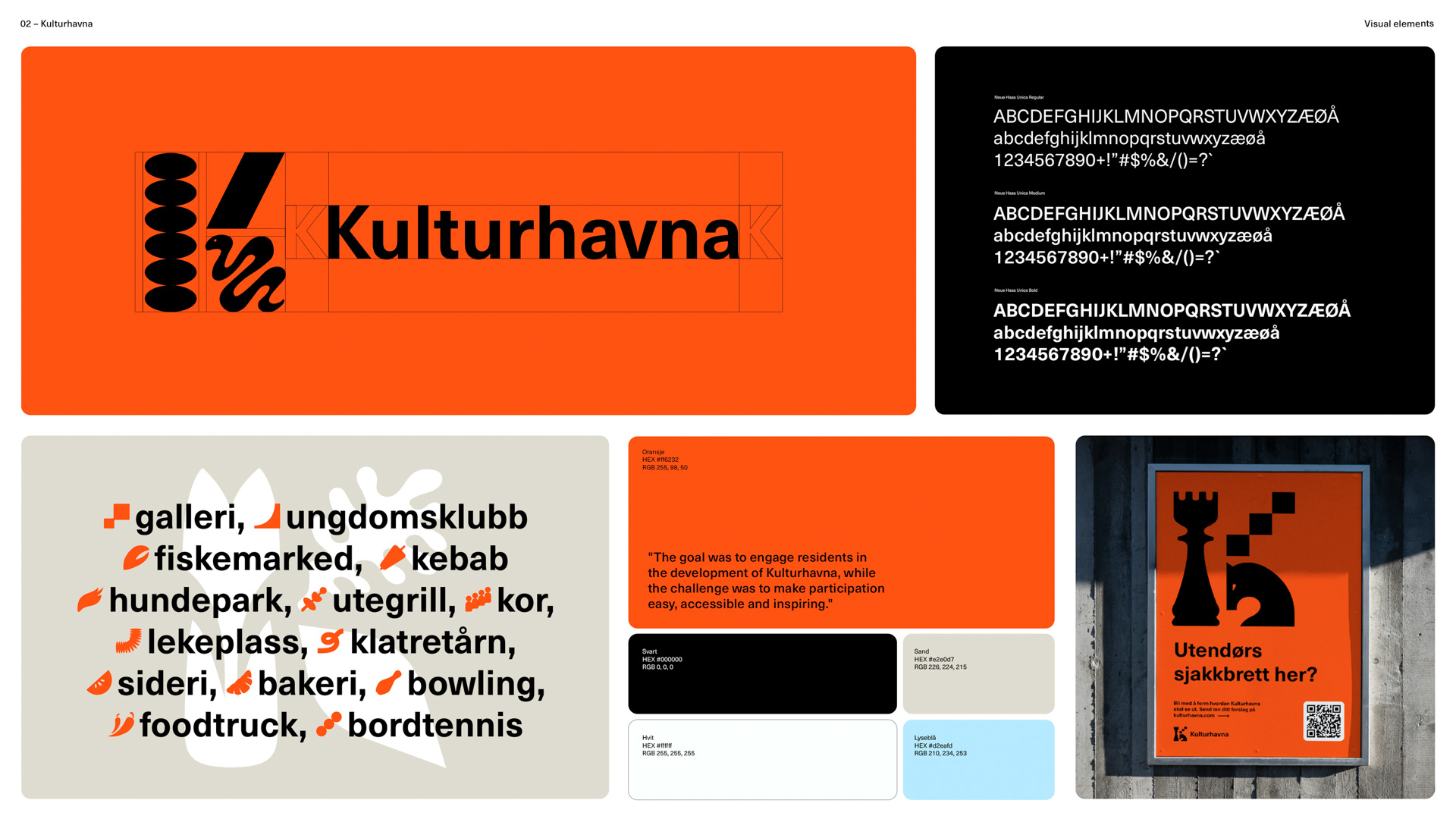
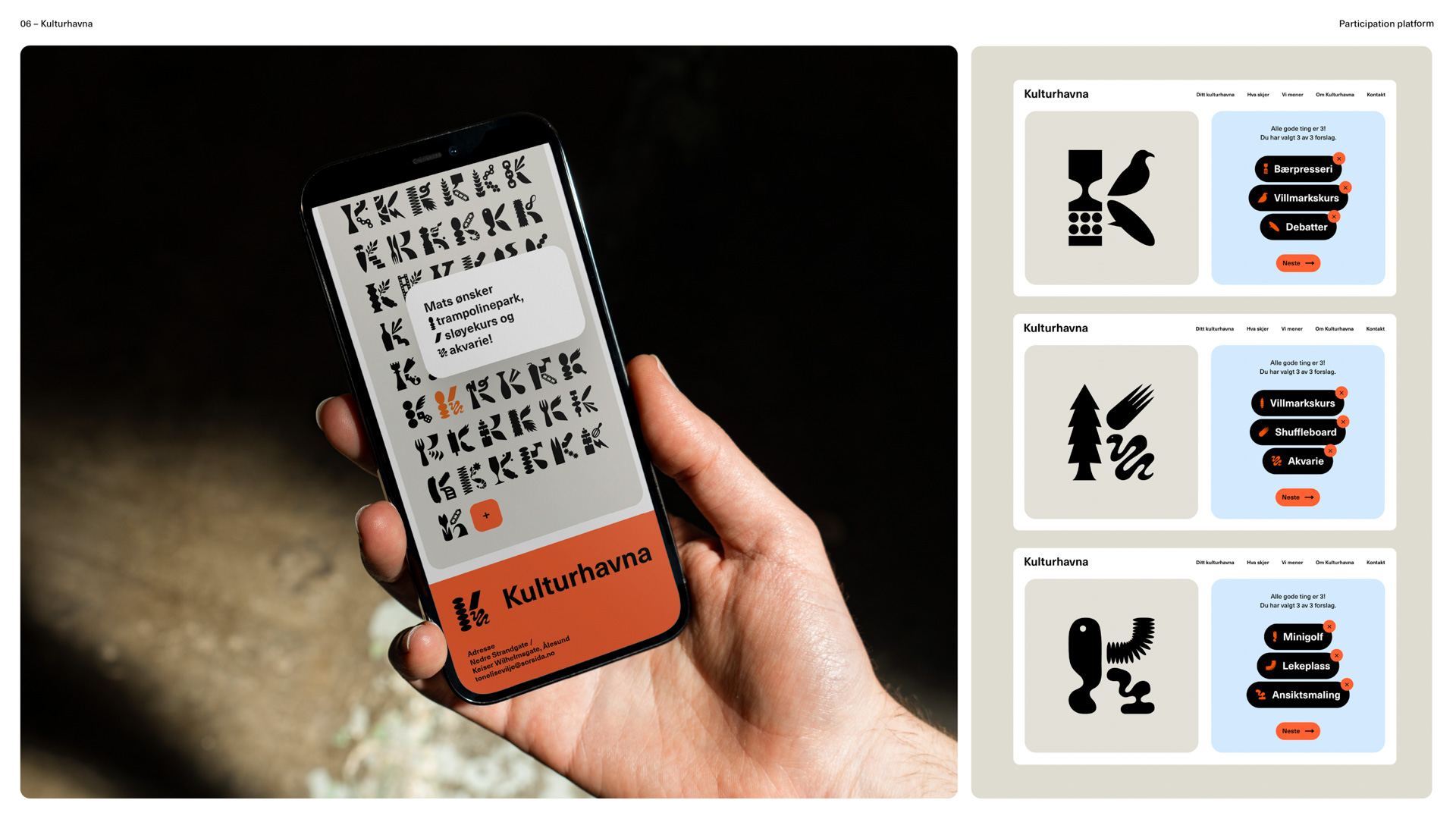
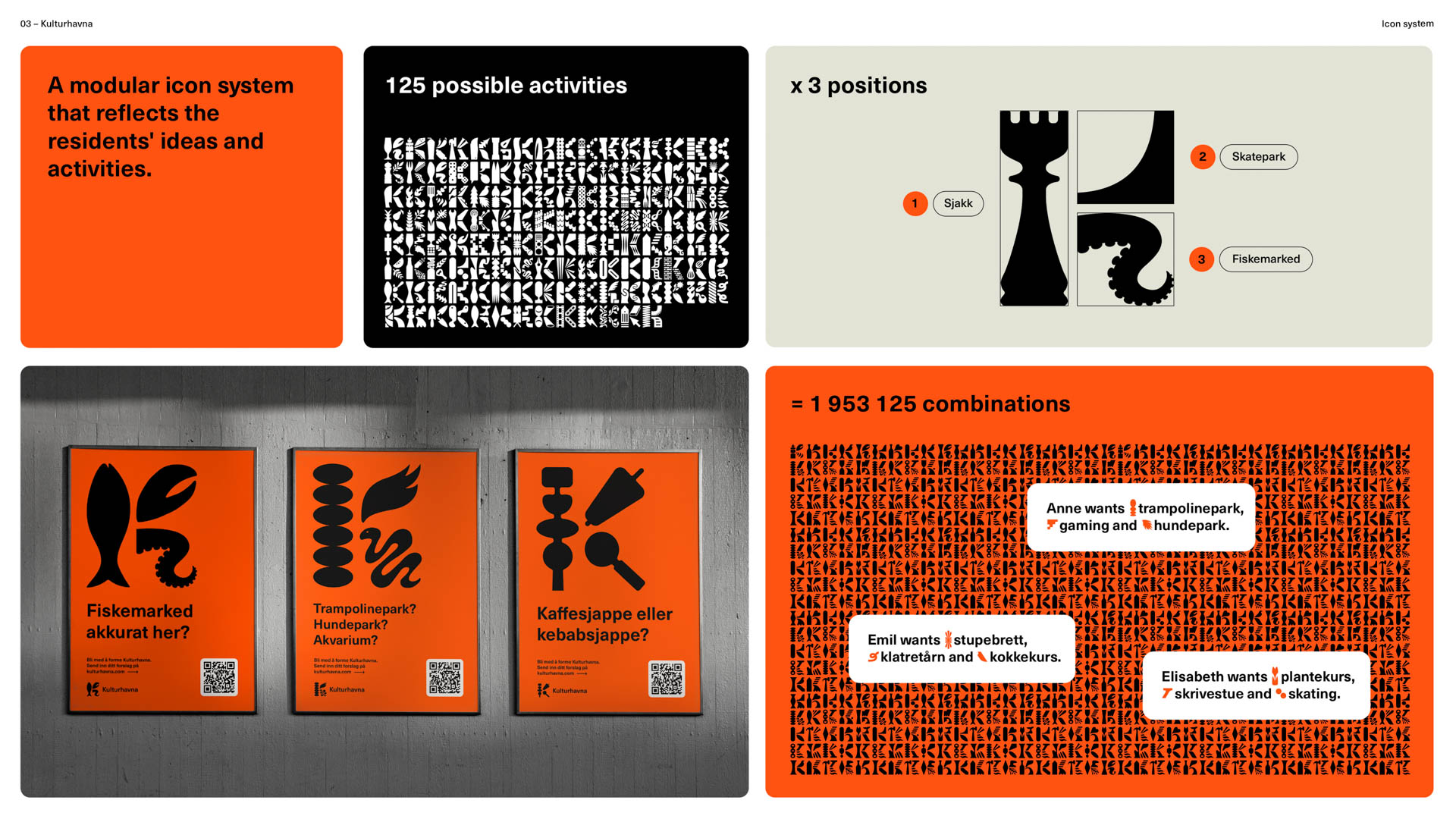
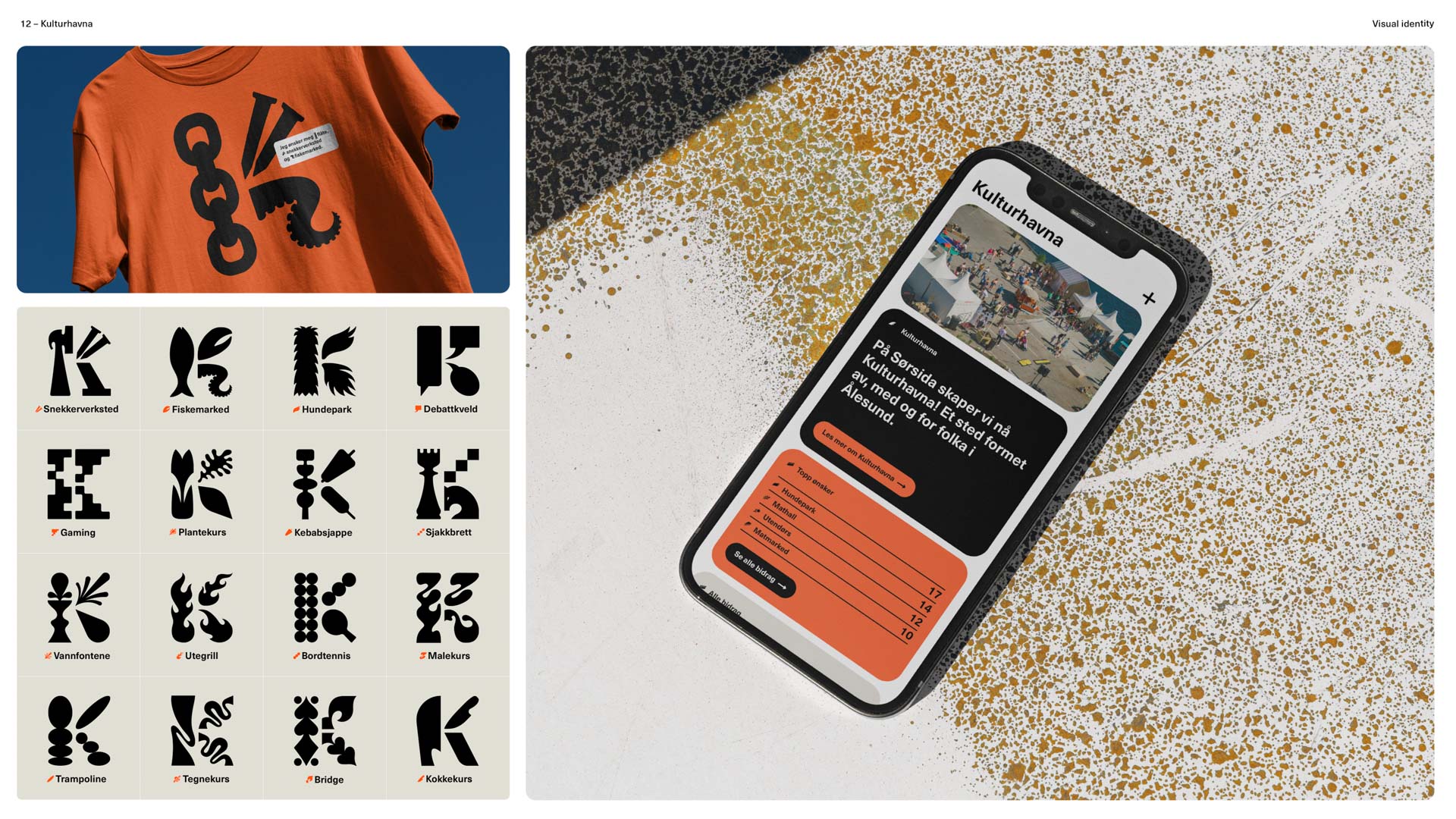
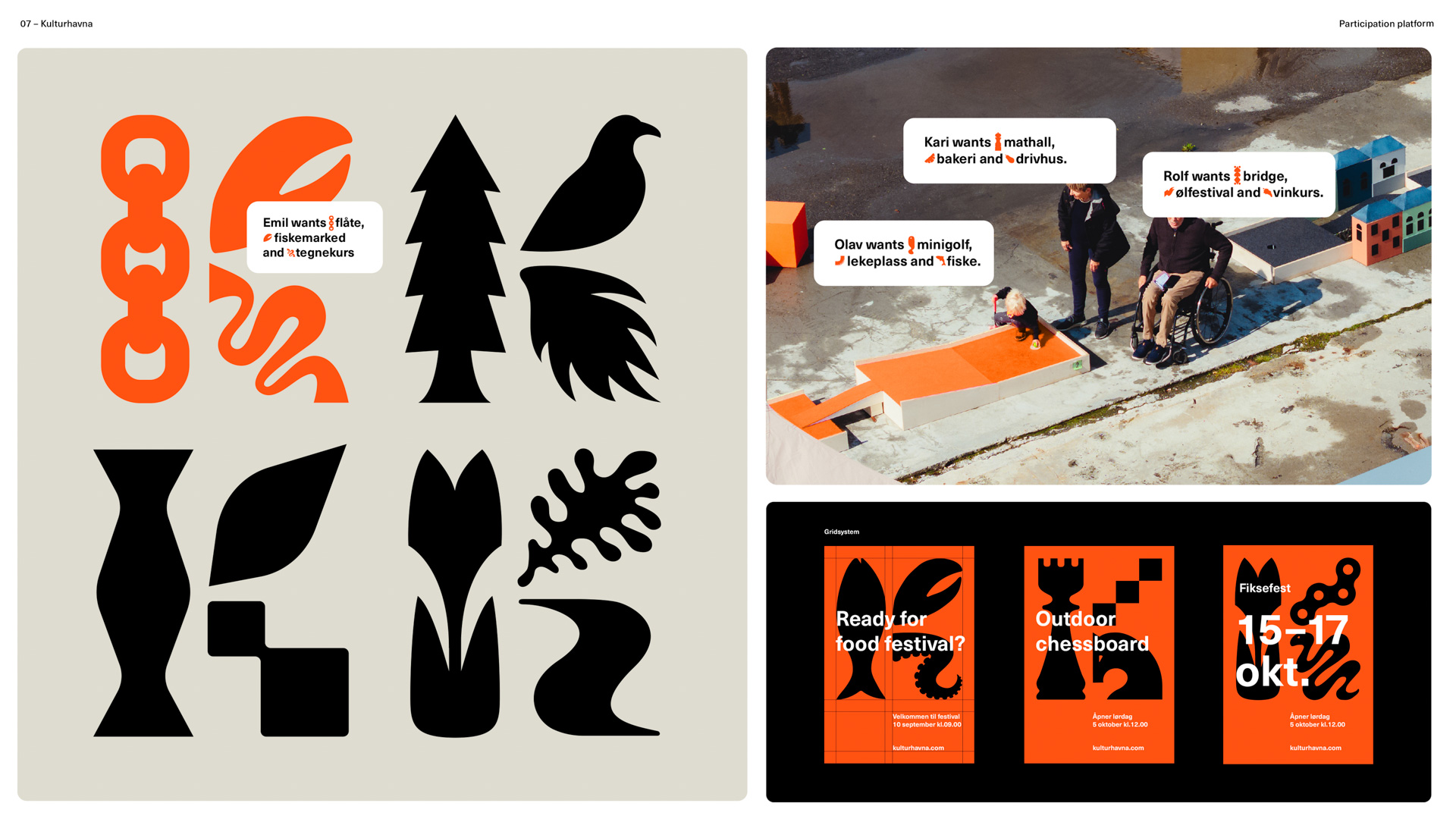
At the heart of the system is the “K” for Kultur. But this isn’t a fixed letter—it’s a symbol built from a three-part grid. Each section is filled with hand-drawn icons representing activities, ideas, or uses suggested by residents: cultural events, children’s games, sports areas, workshops, meeting points, creative installations…
This generative system allows for over 1,953,125 unique combinations. Every citizen who participates in Kulturhavna creates their own “K,” resulting in a personalized version of the logo. The identity doesn’t just represent the place: it is built with the place.
Participatory design: when a brand is co-created, not imposed
One of the project’s boldest decisions was to forgo a traditional logo. Instead, Anti developed a system that is both visual and methodological: the identity is generated directly through community participation.
This breaks away from classic models of institutional branding in Europe—and opens up exciting new possibilities for cities like Barcelona, where participatory processes are already central to contemporary urban planning.
The philosophy is clear: an identity rooted in urban regeneration cannot be static. It must be alive, flexible, and inclusive. Kulturhavna is proof of this.
The digital platform: from graphic design to participatory experience
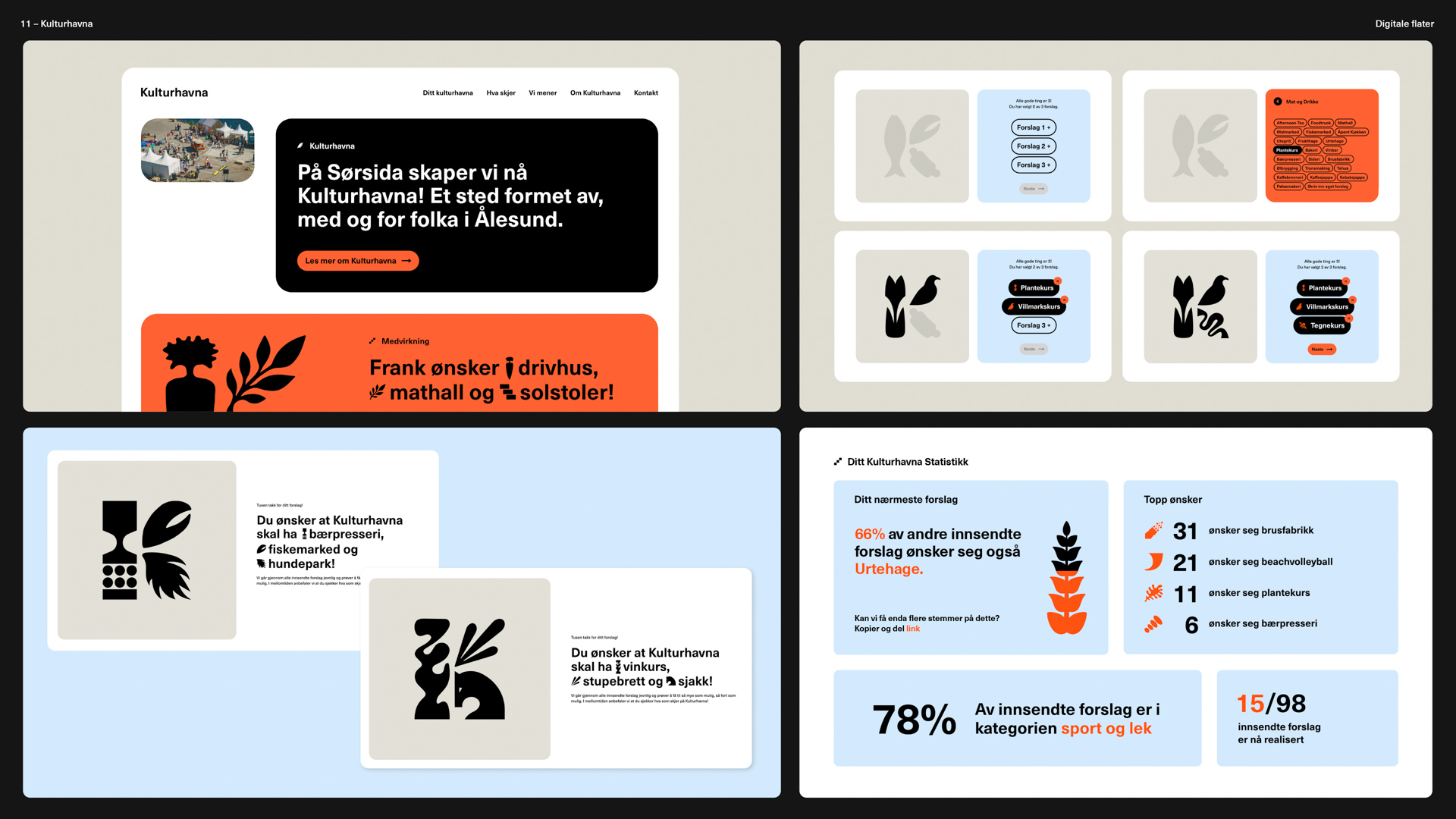
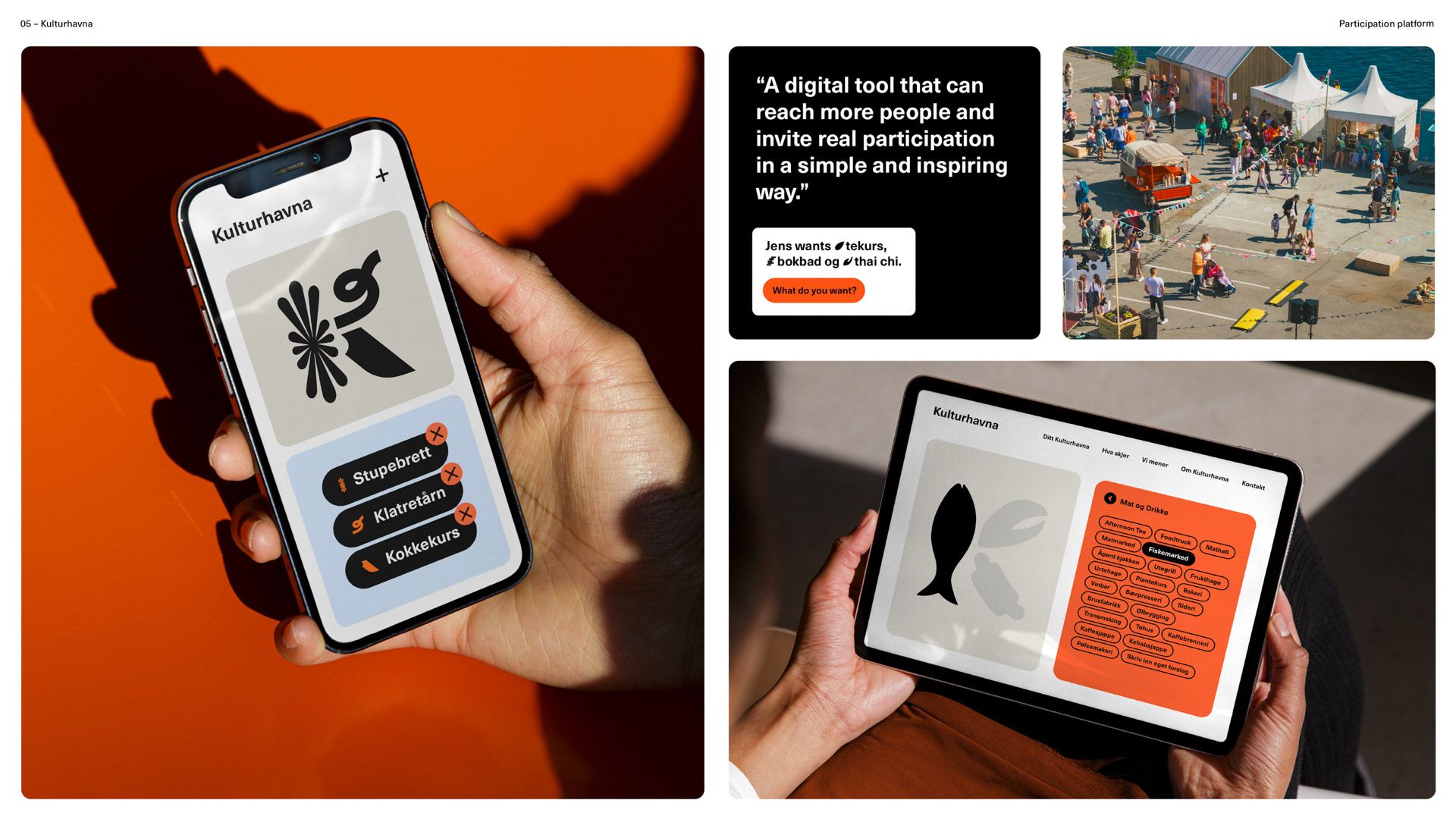
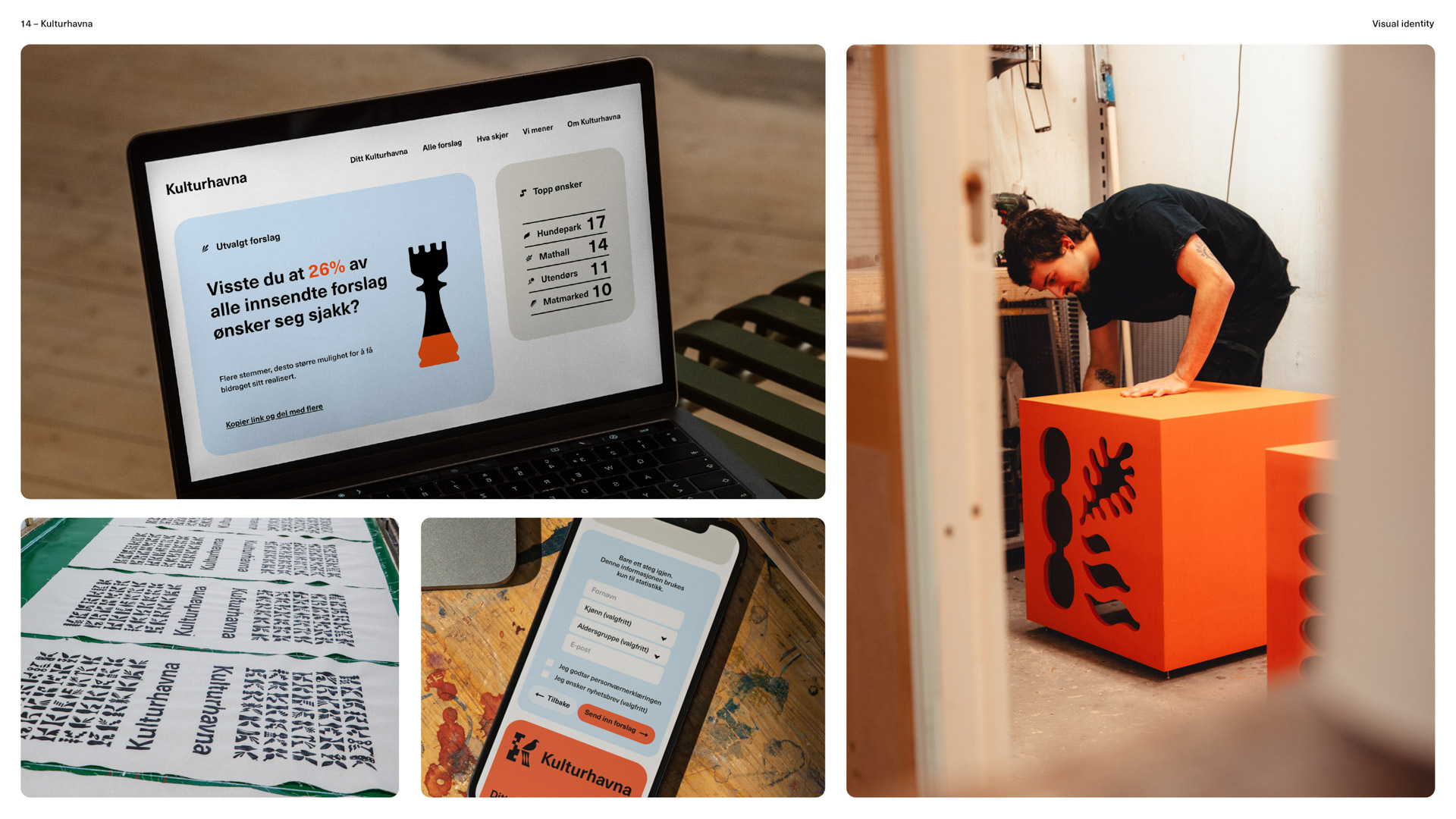
To ensure the identity was more than just a visual concept, Anti developed a digital participation platform designed to be accessible, intuitive, and engaging. Its goal: to turn citizen input into the raw material shaping both the identity and the future of the urban space.
Through the platform, citizens can:
- Submit ideas and suggestions for activities and uses of the space.
- Vote on proposals from other residents.
- See in real time which activities are most in demand.
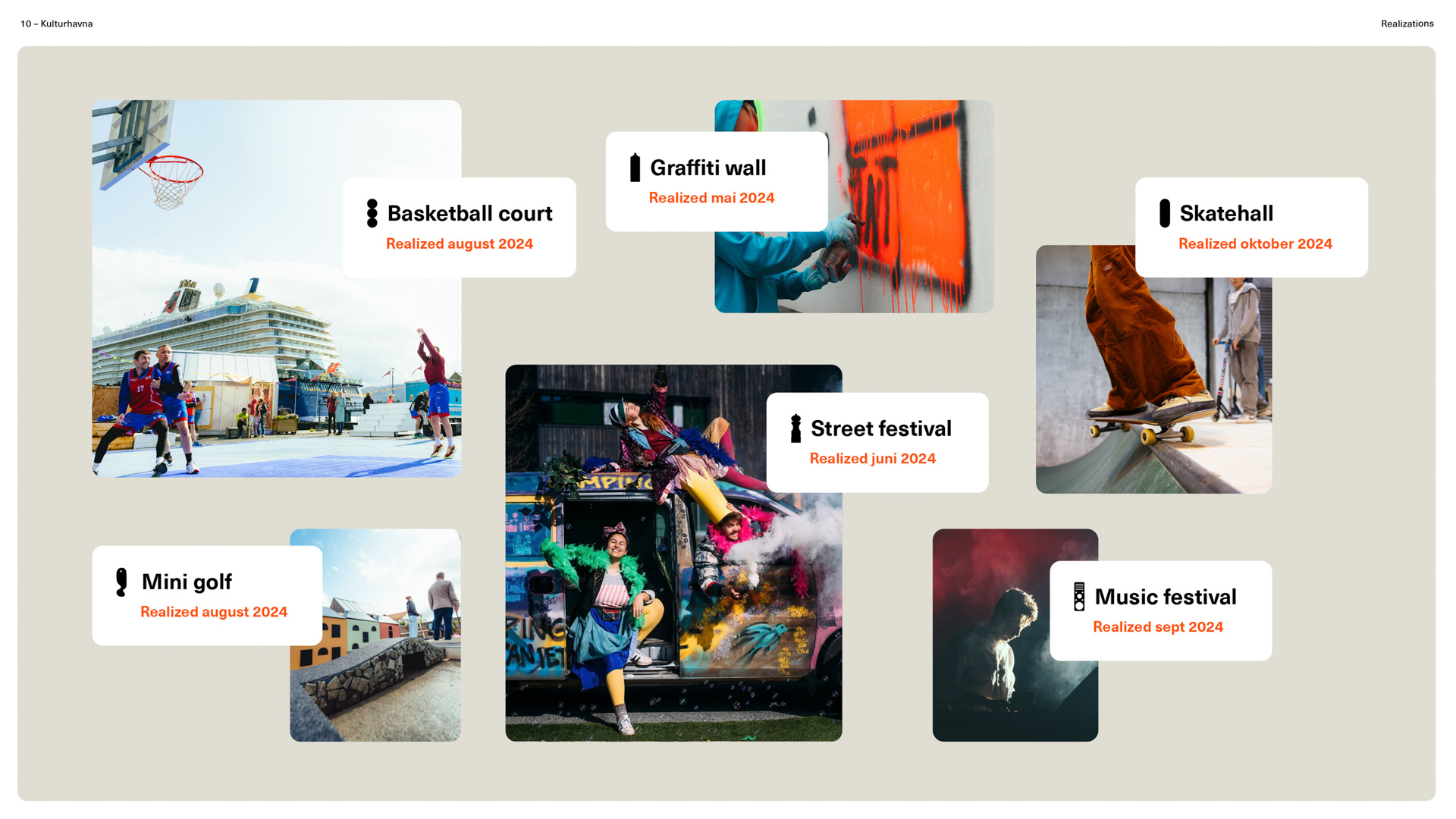
- Track which projects have been implemented.
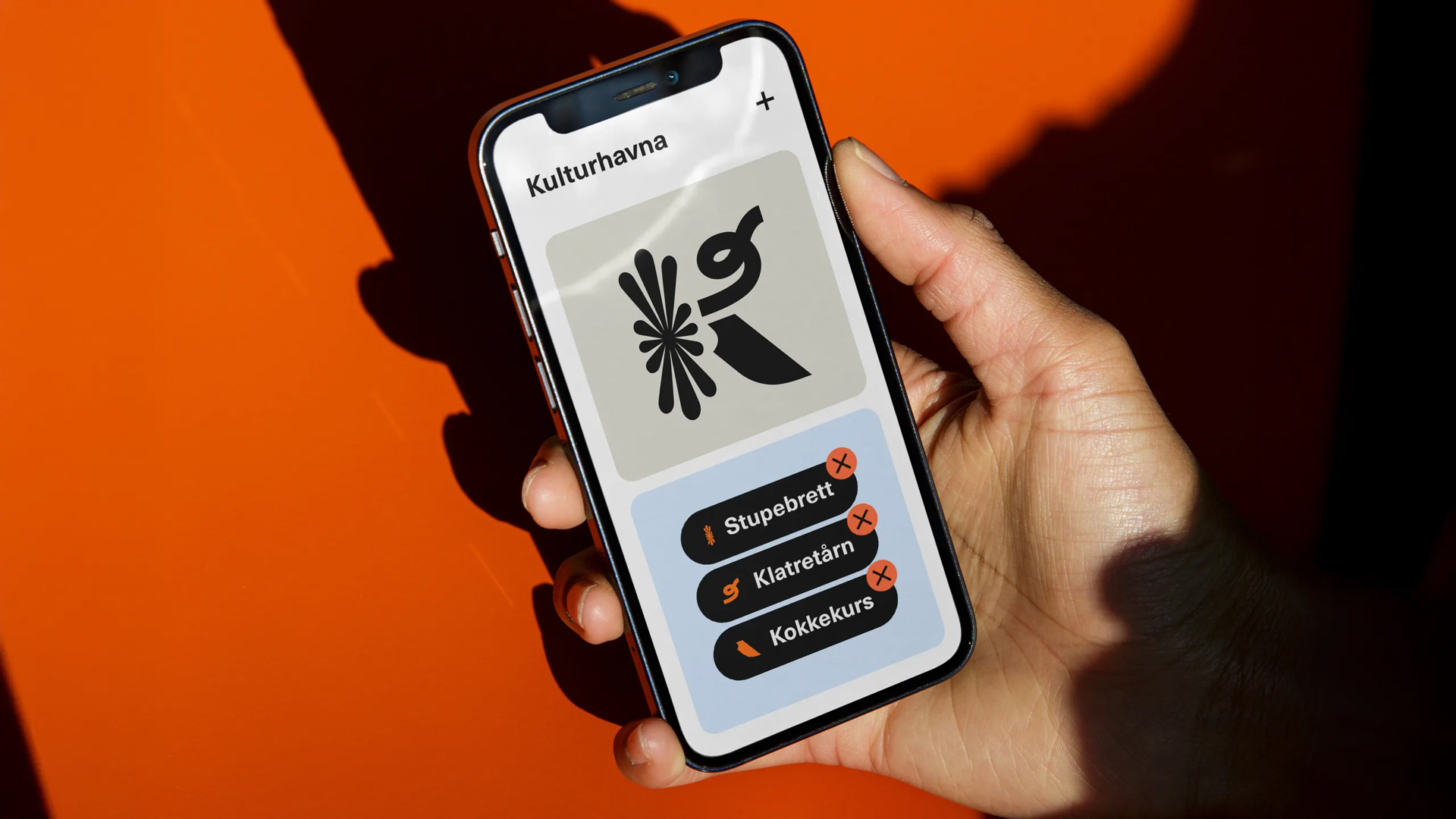
- Automatically generate their own personalized “K.”
This approach solves a common problem: traditional participatory processes (surveys, meetings, panels) are often unappealing and reach only a limited audience. Kulturhavna, by contrast, leverages gamification and instant visualization.
“Your Kulturhavna”: an emotional and personal identity
Once a user submits their contribution, the platform generates a unique version of the “K,” composed of the three selected icons. That “K” becomes their Kulturhavna—a visual representation of their participation.
This customizable symbol strengthens the emotional connection to the project. As a result, the brand works on both a collective and individual level—something rarely achieved in institutional or urban identities.
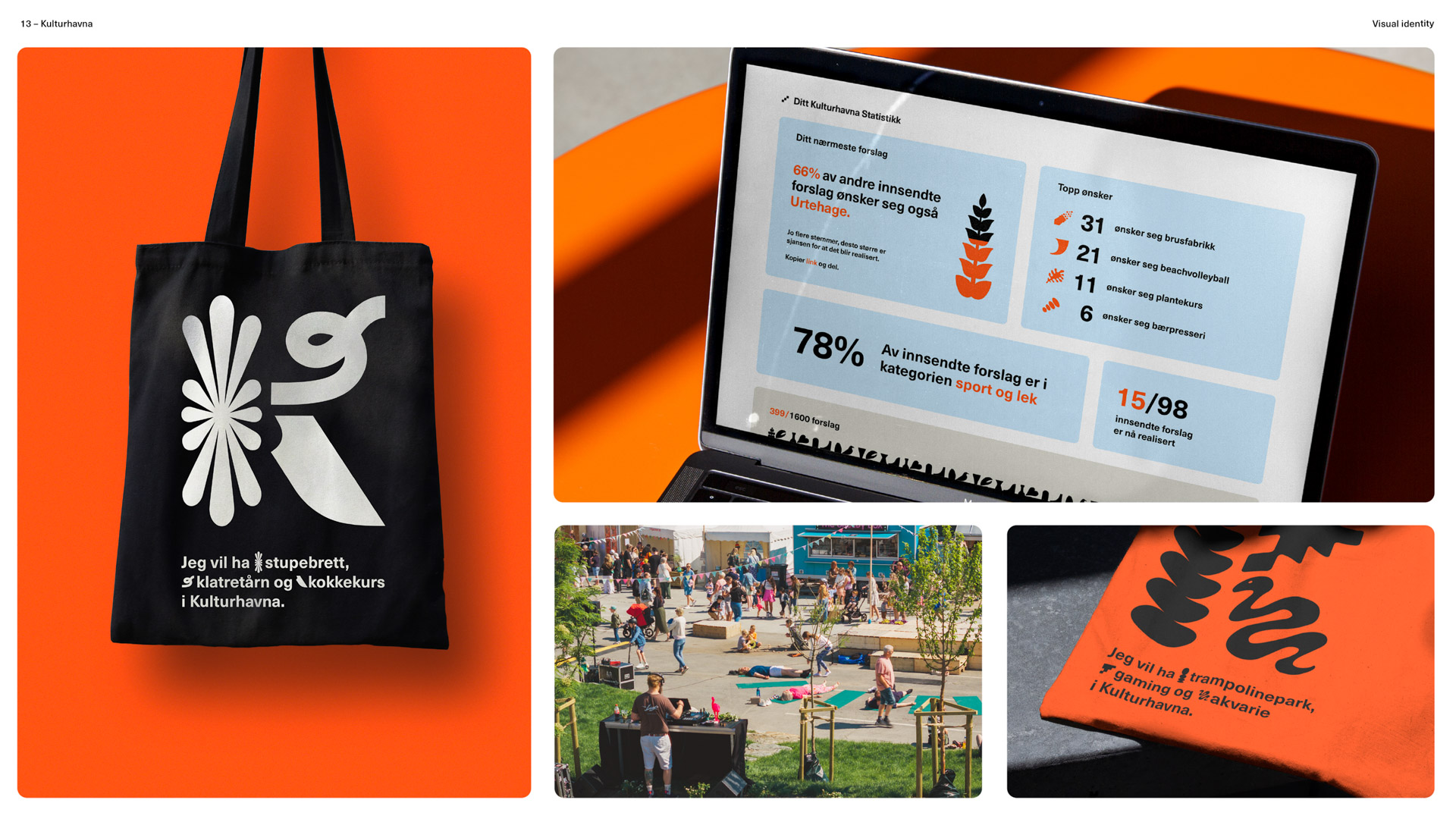
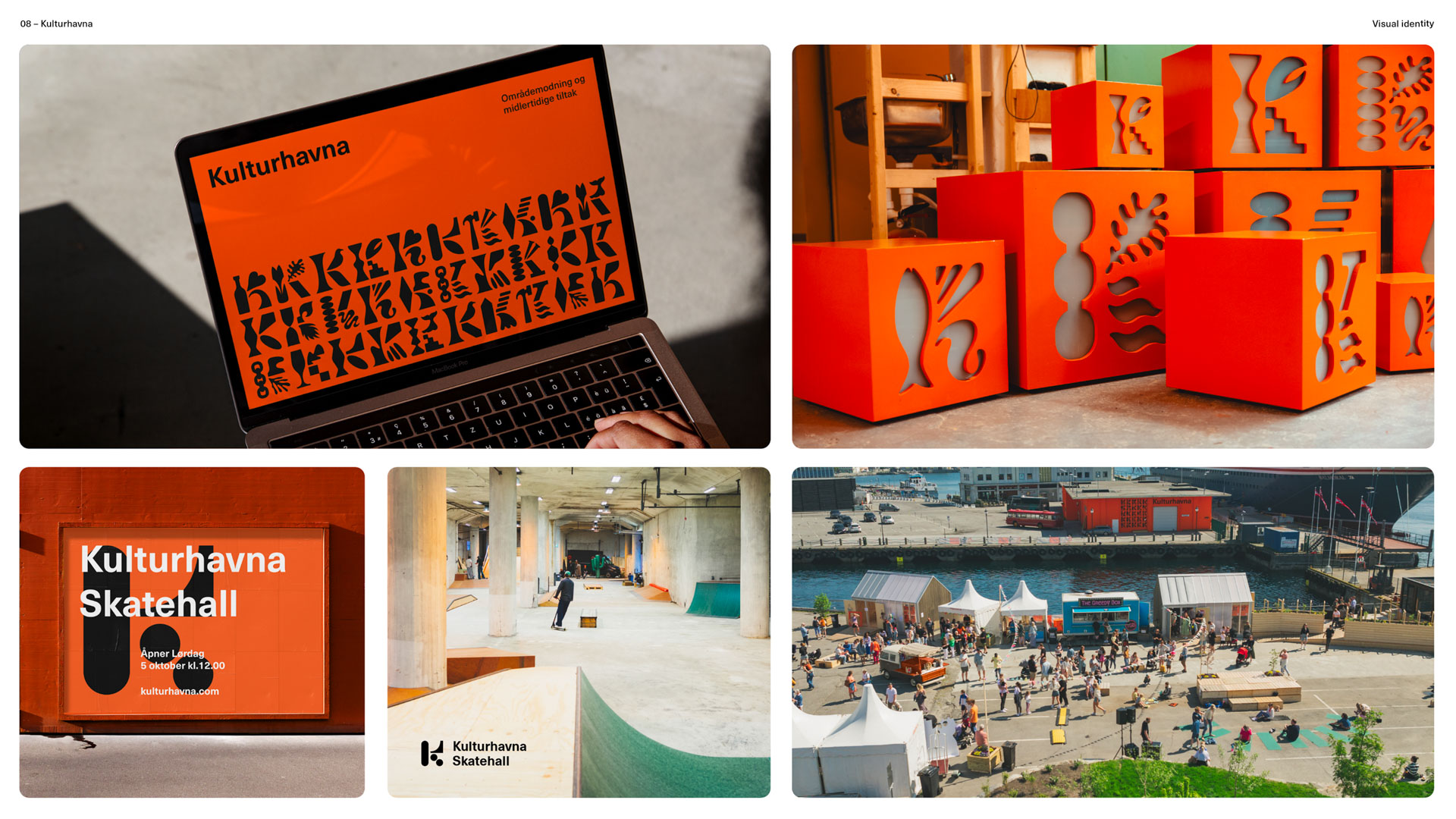
Personalized logo versions can be applied to:
- Merchandise
- Temporary signage
- Event posters
- Participatory activities
- Promotional materials
In this way, the identity moves off the screen and into the daily lives of residents.
Real impact: data that shapes local culture
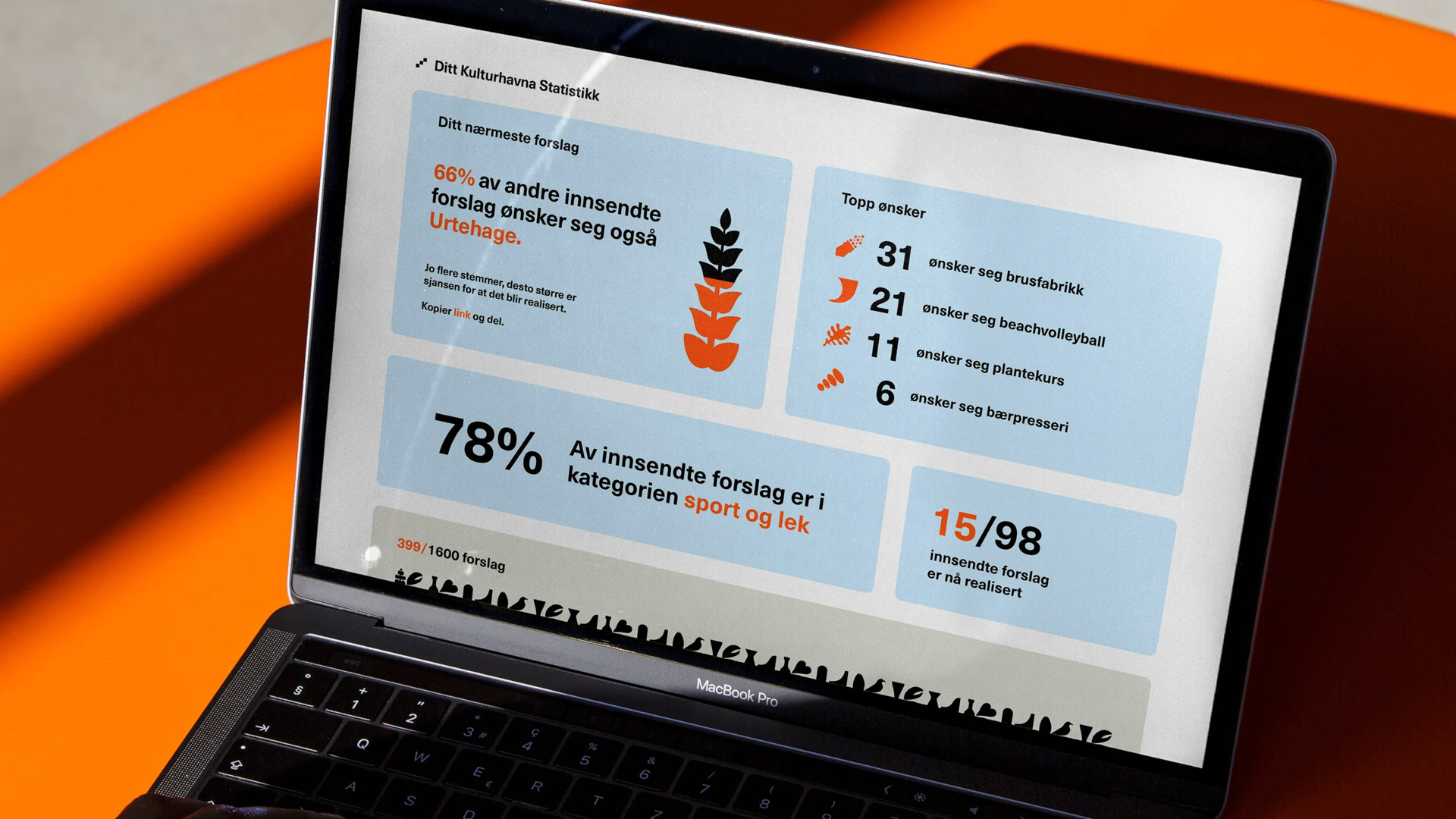
Beyond creating visual identity, the platform offers a real-time data dashboard displaying:
- Most-voted activities
- Top 5 highlighted ideas
- Proposals in progress
- Recently submitted suggestions
- Projects already implemented
This transparency turns design into a bridge between citizens and local authorities—something many cities, including Barcelona, have long sought. Here, graphic design becomes a tool for active listening.
Kulturhavna shows how data visualization + modular identity + participation = an effective formula for building truly inclusive urban spaces.
An identity that works beyond the digital realm
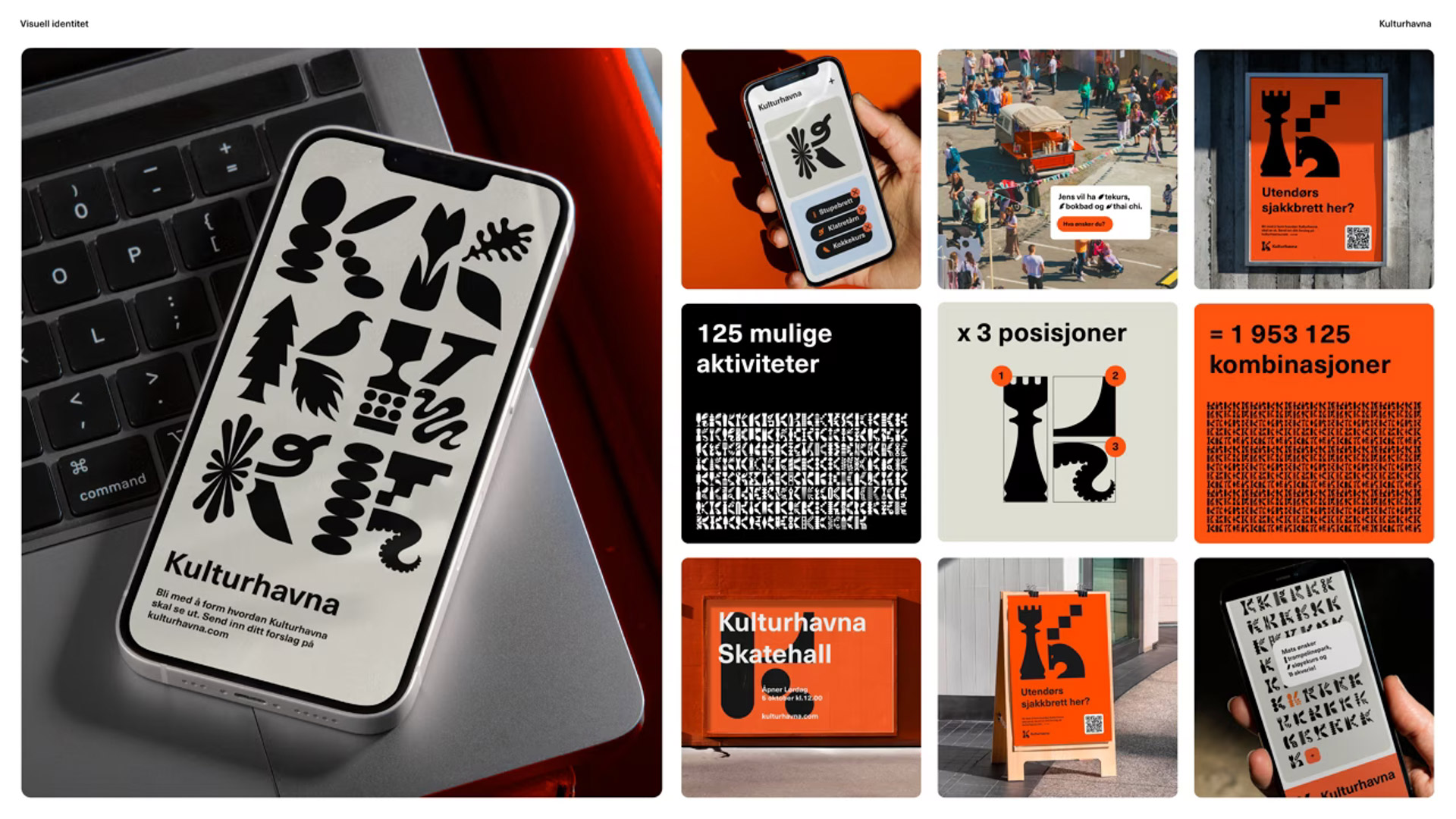
One of the project’s most compelling aspects is its ability to transcend the screen. As a modular, adaptable, and highly visual system, Kulturhavna is seamlessly applied to:
- Cultural programming,
- Wayfinding and signage,
- Community events,
- Participatory workshops,
- Street graphics,
- Custom merchandise.
Every application within the urban space reinforces the core idea: this is a project built by and for the people.
An inspiring example for designers, urbanists, and communicators
For those of us working in graphic design, branding, and web design in Barcelona, Kulturhavna is an outstanding reference. Not only for its flawless visual execution, but because it reminds us that the brands of the future—especially public and cultural brands—must be:
- Adaptive
- Participatory
- Locally connected
- Data-driven
- Human
The project demonstrates that design is not just about decorating reality, but about helping to shape it. An identity that grows with its community is an identity that endures.
Awards and recognition
Kulturhavna has received:
- European Design Awards (ED Awards) 2025 – GOLD
- Category: 102 Brand Logo
Project credits
- Agency: Anti
- Project Owner: Tone Lise Vilje
- Client: Sørsida Utvikling AS
- Creative Director: Mats Ottdal
- Art Director: Carl Bugge
- Illustrator: Mats Ottdal
- Designer: Kristian Thorsen
- Digital Lead: Carl Bugge
- Frontend Developer / Design: Morten Johansen
- Project Manager: Hildegunn Holtet
- Client Manager: Kristin Grimstad
- Sound Design: Gabriel Lerbæk Pedersen
- Photography: Memoria
Conclusion: a new way of understanding visual identity
Kulturhavna is not just a graphic brand—it’s a living system. An organism in motion, built by the community and constantly evolving. It’s proof that graphic design can be more democratic, more emotional, and more connected to its context.
For those of us working in branding, communication, and web design in Barcelona, this project is not only inspiring—it’s a reminder of where visual identities are headed. Flexible, participatory systems that foster conversation and a sense of belonging.
Kulturhavna makes it clear: culture isn’t imposed—it’s built. And when that process is made visible through smart, modular, human-centered design, the result is an identity that not only represents a place, but a way of living it.