How Coca-Cola Turned Street Murals and Hand-Painted Signs into a Global Campaign about Visual Memory, Cultural Branding, and Collective Creativity
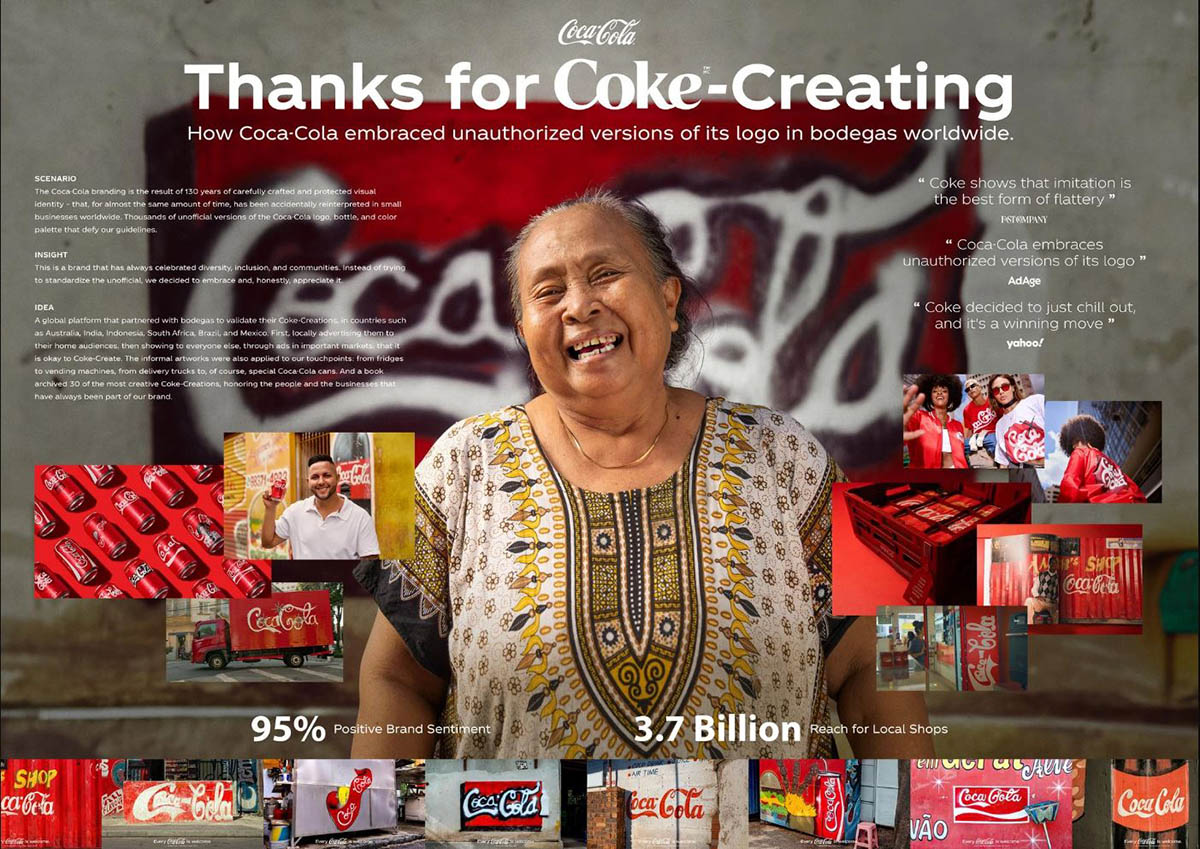
Some communication campaigns try to control every visual detail of a brand. Then there are projects like Thanks for Coke-Creating, where one of the world’s most recognizable identities does the exact opposite: it opens itself up to human, imperfect, and spontaneous reinterpretation. The campaign developed by VML for Coca-Cola doesn’t just celebrate “imperfect” versions of its logo—it celebrates something much deeper: how a global brand becomes embedded in the collective visual memory of millions.
Honored with the Grand Prix and a Gold Award in the Outdoor – Food & Drink category, as well as multiple accolades at D&AD—including a Yellow Pencil, several Graphite Pencils, and Wood Pencils—the campaign stands out as one of the most compelling examples of contemporary branding, popular visual culture, and emotional communication.
For those of us working in branding, graphic design, communication campaigns, and visual design in Barcelona, this project is an extraordinary lesson in how a brand can move beyond a rigid corporate identity and become something much more alive: a language shared by people.
Context: When a Brand Becomes Part of the Urban Landscape
Few visual identities are as globally recognized as Coca-Cola’s. Its logo, typeface, and signature red have been woven into popular culture for generations. That’s why the brand has been reimagined thousands of times in everyday settings around the world: on the facades of small shops, bars, markets, bodegas, family restaurants, and hand-painted murals.
Many of these versions ignore any corporate guidelines. The letters shift, curves warp, proportions change, and each stroke adapts to the tools or skills of the individual creator. Yet the result remains unmistakable. This is where the true insight of the campaign lies.
Coca-Cola realized these popular reinterpretations weren’t visual mistakes. They were evidence of something far more powerful: the brand no longer belongs solely to the company. It belongs to culture itself.
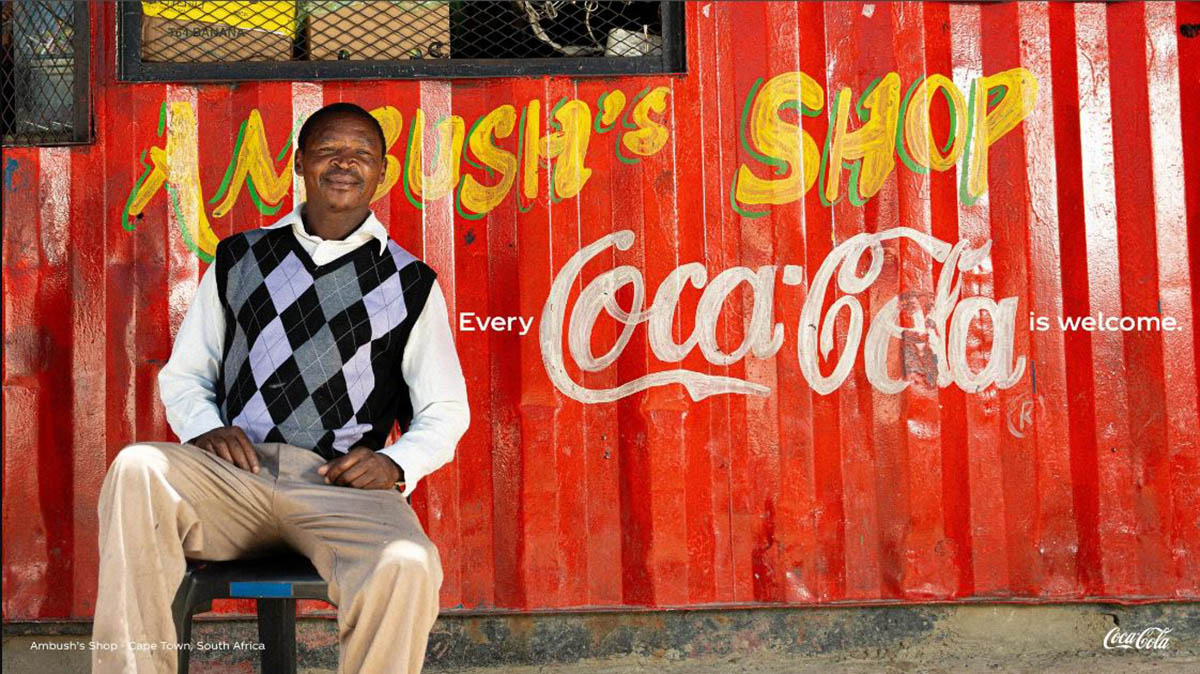
For decades, street artists, shopkeepers, and small business owners have recreated the logo from memory, making it part of the urban landscape and the everyday visual identity of their communities. Thanks for Coke-Creating was created precisely to recognize and thank this spontaneous creativity.
The Idea: Turning Popular Branding into a Global Campaign
The creative concept behind the campaign is as simple as it is brilliant:
People have been “co-creating” Coca-Cola for years.
Not from creative studios or branding departments, but from the streets, shops, and small businesses where the brand has been manually reinterpreted, generation after generation.
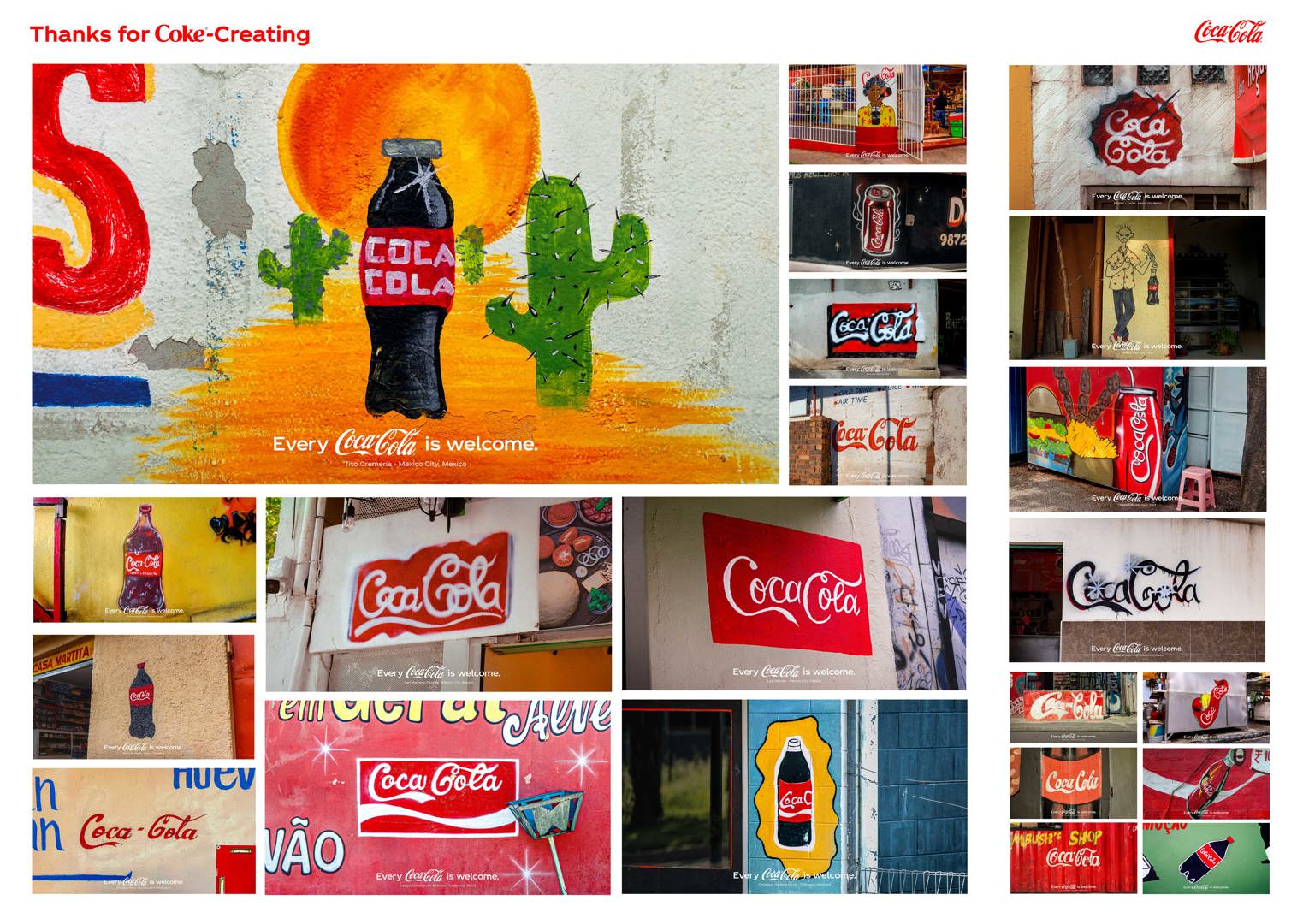
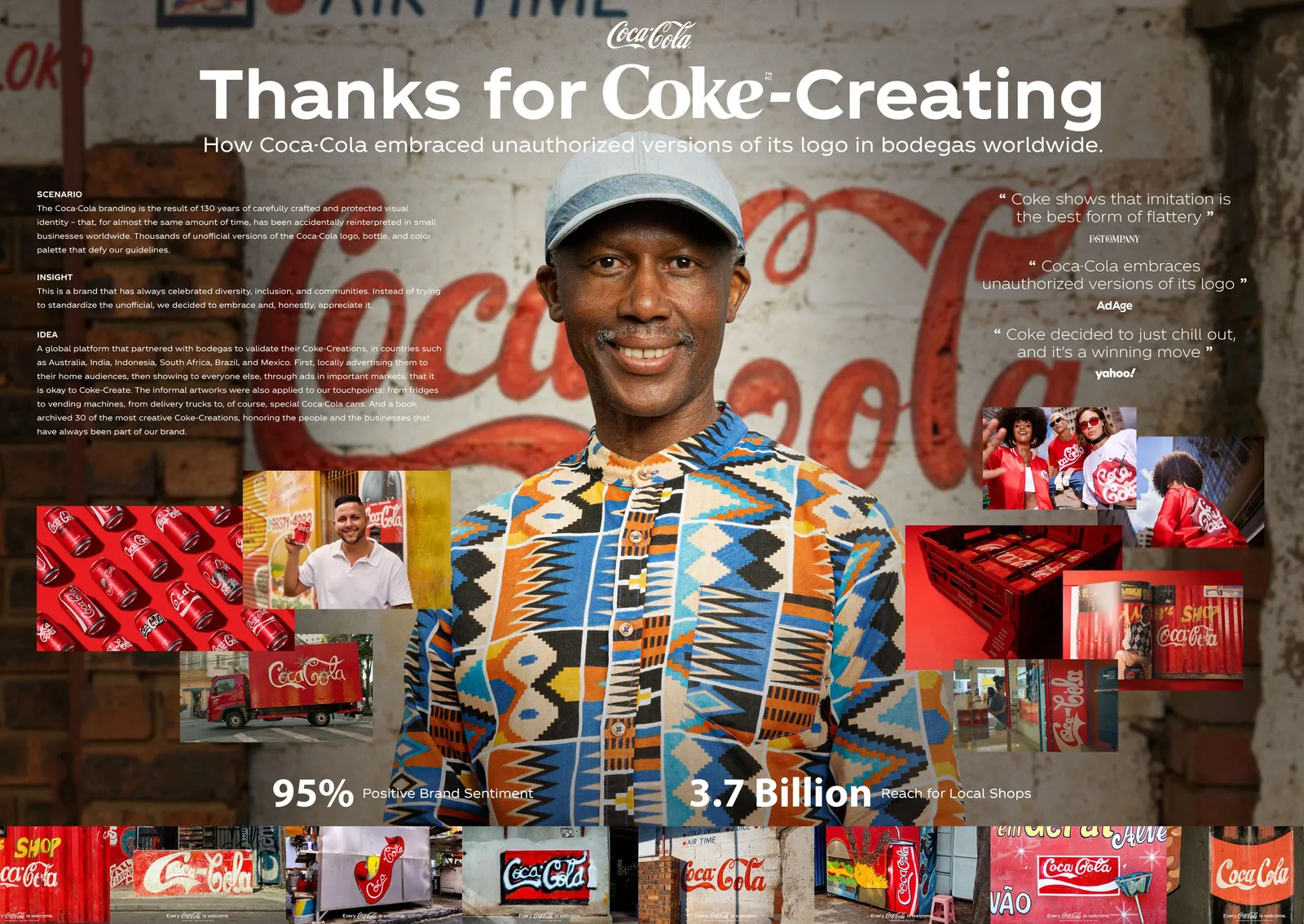
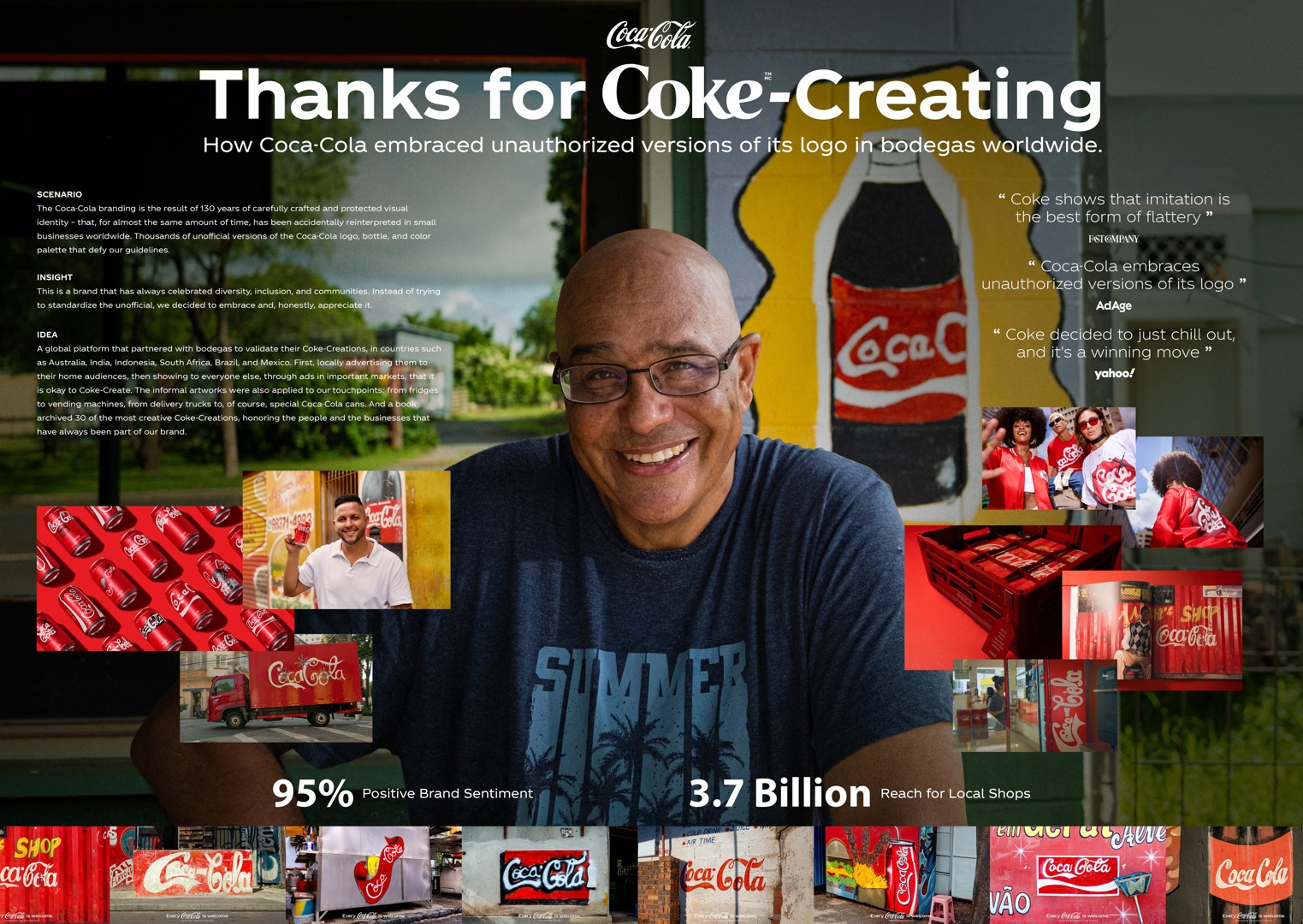
VML took these informal murals and popular logo versions and elevated them into official campaign assets. But they did so with a unique approach: instead of correcting imperfections or redrawing the illustrations, they chose to preserve their authenticity entirely.
This detail is key. Coca-Cola doesn’t “improve” these pieces. It doesn’t try to professionalize them or turn them into a cleaner, more corporate version. Instead, it elevates them exactly as they are, honoring their human and artisanal character.
The result is a campaign that strikes a balance between two seemingly opposite dimensions:
- the iconic power of a global brand,
- and the spontaneous sensibility of popular design.
Vernacular Design and Popular Visual Culture
One of the most fascinating aspects of the project is how it champions the value of vernacular design. In graphic design, this term refers to visual expressions created outside traditional professional circles: street signs, improvised posters, hand lettering, or folk illustrations.
For years, these expressions were seen as “incorrect” compared to standardized corporate design. Yet campaigns like Thanks for Coke-Creating prove the opposite: popular design has enormous emotional and cultural power.
In the campaign video, we see painters, shop owners, and small businesspeople talking about Coca-Cola from memory and intuition. Many recreate the logo without any visual reference. They remember it because it’s part of their daily lives.
That detail is extraordinarily powerful from a branding perspective. It means the visual identity no longer lives only in corporate manuals, but also in collective memory.
For any graphic design and branding studio in Barcelona, this campaign is a timely reflection on how contemporary brands are also built through cultural appropriation and popular participation.
Imperfection as a Mark of Authenticity
Another of the project’s great strengths is its embrace of visual imperfection. In an era where many identities strive for absolute precision and hyper-controlled graphic systems, Coca-Cola chooses to celebrate the opposite.
Crooked letters, uneven strokes, or odd proportions are no longer seen as flaws, but as marks of humanity. Each mural and reinterpretation carries the imprint of a specific person, a manual technique, and a unique cultural context.
This connects directly with a very current trend in branding and visual communication: brands no longer need to appear perfect to earn trust. In many cases, emotional authenticity is far more powerful than technical perfection.
VML understands this cultural shift perfectly. The campaign doesn’t mock or romanticize these popular reinterpretations; it presents them with respect and admiration.
As a result, the campaign feels much closer to a cultural archive or visual documentary than to a conventional advertising piece.
Art Direction: Between Advertising and Cultural Archive
Visually, the campaign is executed with great sensitivity. The pieces use clean, elegant compositions that allow the murals and popular signs to breathe.
The art direction avoids any excess. There are no unnecessary effects or artificial spectacle. The original reinterpretations take center stage.
This approach creates a striking contrast:
- one of the world’s biggest brands,
- represented through hand-drawn, imperfect, deeply human illustrations.
The campaign achieves something rare: maintaining Coca-Cola’s iconic strength while giving space to popular creativity.
Moreover, the use of outdoor media adds a particularly interesting conceptual layer. Many of these illustrations originated in public spaces. Bringing them back to the streets through outdoor advertising is almost a symbolic act of cultural return.
Emotional Communication and Participatory Branding
Beyond graphic design, Thanks for Coke-Creating works because it understands a fundamental truth about contemporary brands: the strongest identities are those people feel as their own.
The campaign isn’t about product or consumption. It’s about memory, community, and emotional connection. Coca-Cola publicly acknowledges that millions of people have helped, knowingly or not, to keep its visual identity alive around the world.
This makes the campaign a brilliant example of:
- participatory branding,
- emotional communication,
- flexible identity,
- and shared visual culture.
Instead of imposing perfection, the brand celebrates collective creativity. That’s precisely why the campaign feels so genuine and relatable.
Impact and International Recognition
Thanks for Coke-Creating received international acclaim, winning the Grand Prix and a Gold Award in the Outdoor – Food & Drink category. The project also earned major recognition at the D&AD Awards, including:
- D&AD Yellow Pencil,
- several Graphite Pencils,
- and multiple Wood Pencils.
These awards underscore the project’s significance not just as an advertising campaign, but as a piece of contemporary design and visual craft.
The creative industry recognized that the campaign went far beyond traditional outdoor advertising. It was a sophisticated reflection on visual identity, popular culture, and collective memory.
Conclusion: When a Brand Realizes It’s Already Part of Culture
Thanks for Coke-Creating proves that the most powerful branding doesn’t always come from total control, but from a brand’s ability to embrace how people transform, adapt, and make it their own.
From our perspective as a branding, graphic design, and communication agency in Barcelona, this campaign offers one of the most compelling lessons in contemporary branding: the most iconic brands are those that naturally integrate into people’s daily lives and visual culture.
Coca-Cola understood that those imperfect murals weren’t incorrect versions of its identity. They were signs of affection, collective memory, and popular creativity. By publicly recognizing them, the brand turned vernacular design and spontaneous street art into one of the most human and culturally relevant communication campaigns of the year.
Credits
Project: Thanks for Coke-Creating
Agency: VML
Brand: Coca-Cola
Country: United States
Category: Outdoor – Food & Drink
Awards: Grand Prix, Gold Award, D&AD Yellow Pencil, Graphite Pencil, Wood Pencil
Campaign type: Branding / Outdoor / Visual Communication