From Sidewalks to Messages: How Cemento Sol Turned Urban Space into a Nationwide Social Communication Campaign
Some communication campaigns live on screens, others in print, and a select few transcend any format to become part of everyday life. Sightwalks, the project developed by Circus Grey Peru for Cemento Sol / UNACEM, belongs to this last group. Winner of some of the industry’s most prestigious awards—including multiple Grand Prix at Cannes Lions, D&AD Yellow Pencils, and honors at Clio, One Show, ANDYs, and LIA—Sightwalks redefines what a communication campaign can be when design becomes social infrastructure.
For those of us working in graphic design, branding, communications, and experience design from Barcelona, this project is an outstanding case study: a campaign where the medium isn’t an ad, but the city itself; the message isn’t spoken, but felt; and the impact is measured not just in reach, but in autonomy, inclusion, and dignity.
Context: An Invisible Challenge in Public Space
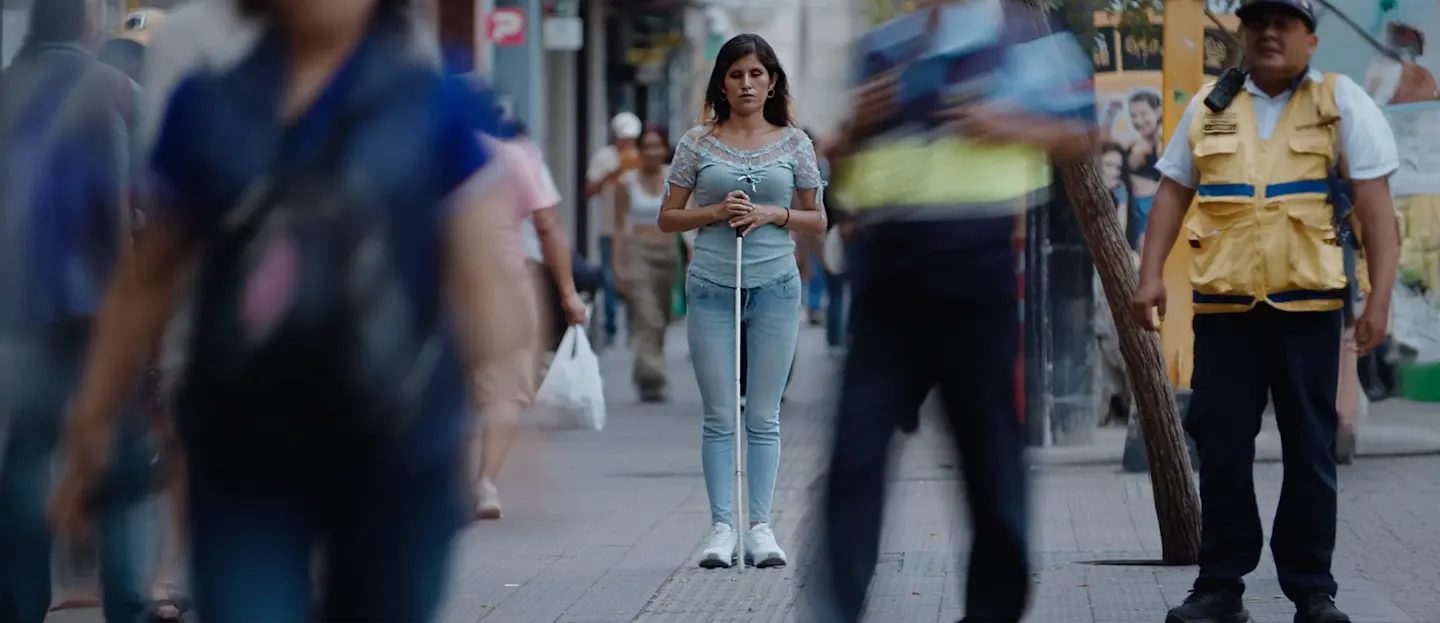
Peru has one of the highest rates of visual impairment in the region. Yet this reality has long been overlooked in urban planning. People with visual disabilities navigate cities designed almost exclusively for those who can see: sidewalks without information, confusing crossings, inaccessible signage, and a constant dependence on others for basic tasks like finding a bank, restaurant, or pharmacy.
Against this backdrop, Cemento Sol—a brand under UNACEM—faced a strategic challenge: how to translate its brand purpose into real, tangible action? It wasn’t enough to talk about inclusion or sustainability; it had to be demonstrated through both the product and the urban environment it helps build.
Sightwalks was born from this premise: transforming a material traditionally linked to construction into a tool for social communication. Not just a one-off campaign, but a replicable system capable of improving the lives of hundreds of thousands.
The Idea: Turning Sidewalks into a Communication System
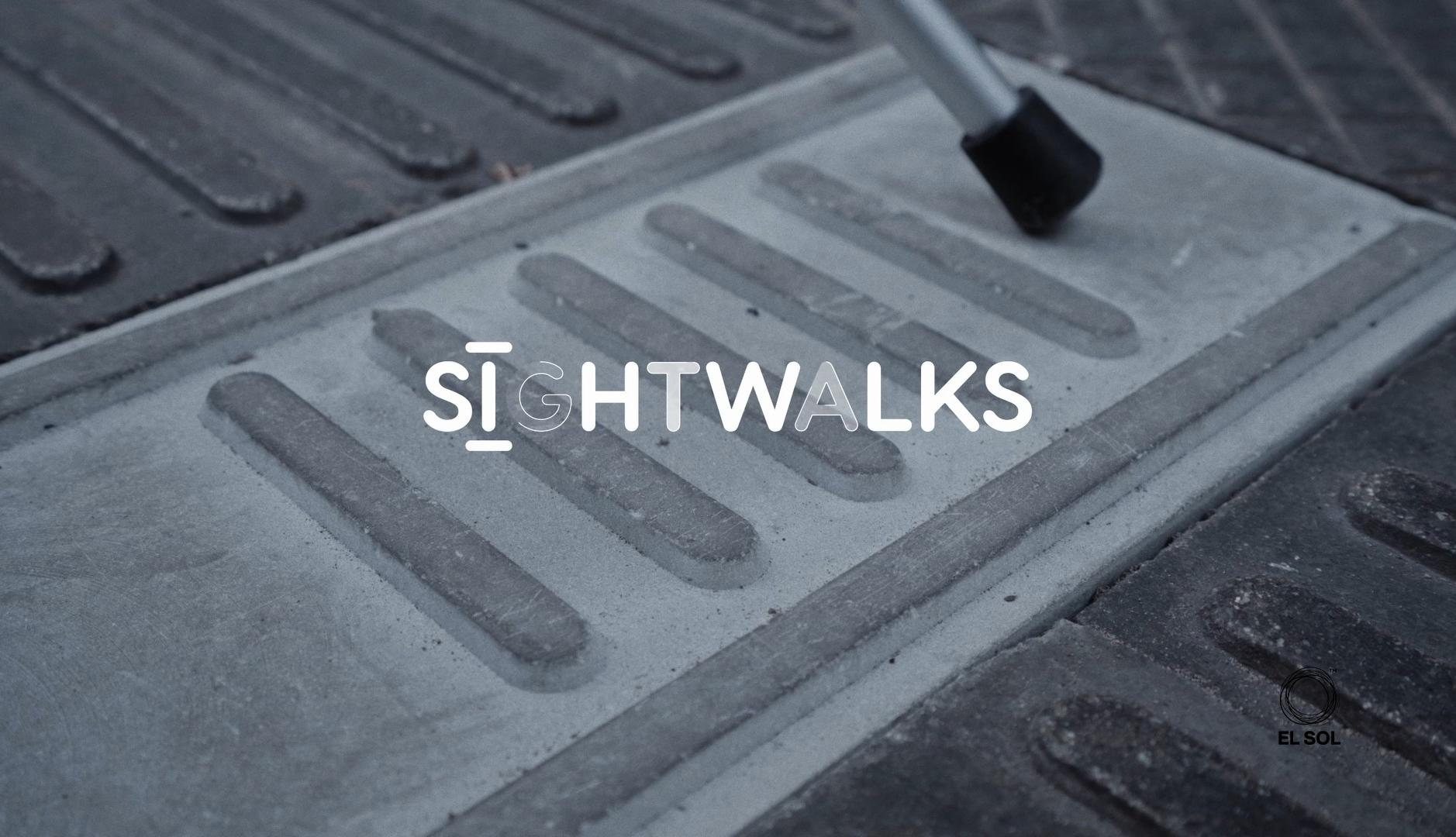
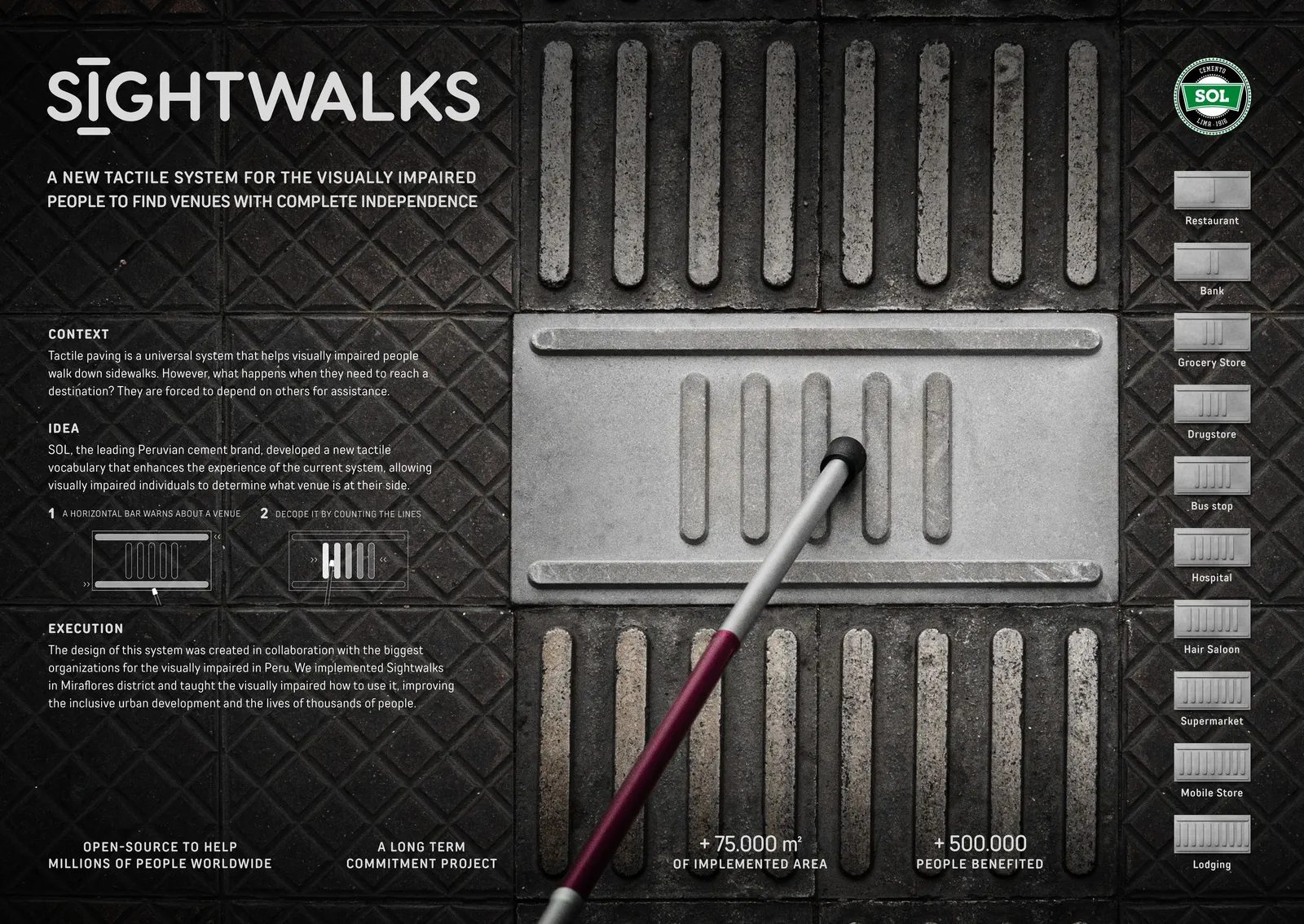
The core idea behind Sightwalks is as simple as it is powerful: if sidewalks already use tactile paving to indicate directions or crossings, why not expand that language to convey more complex information?
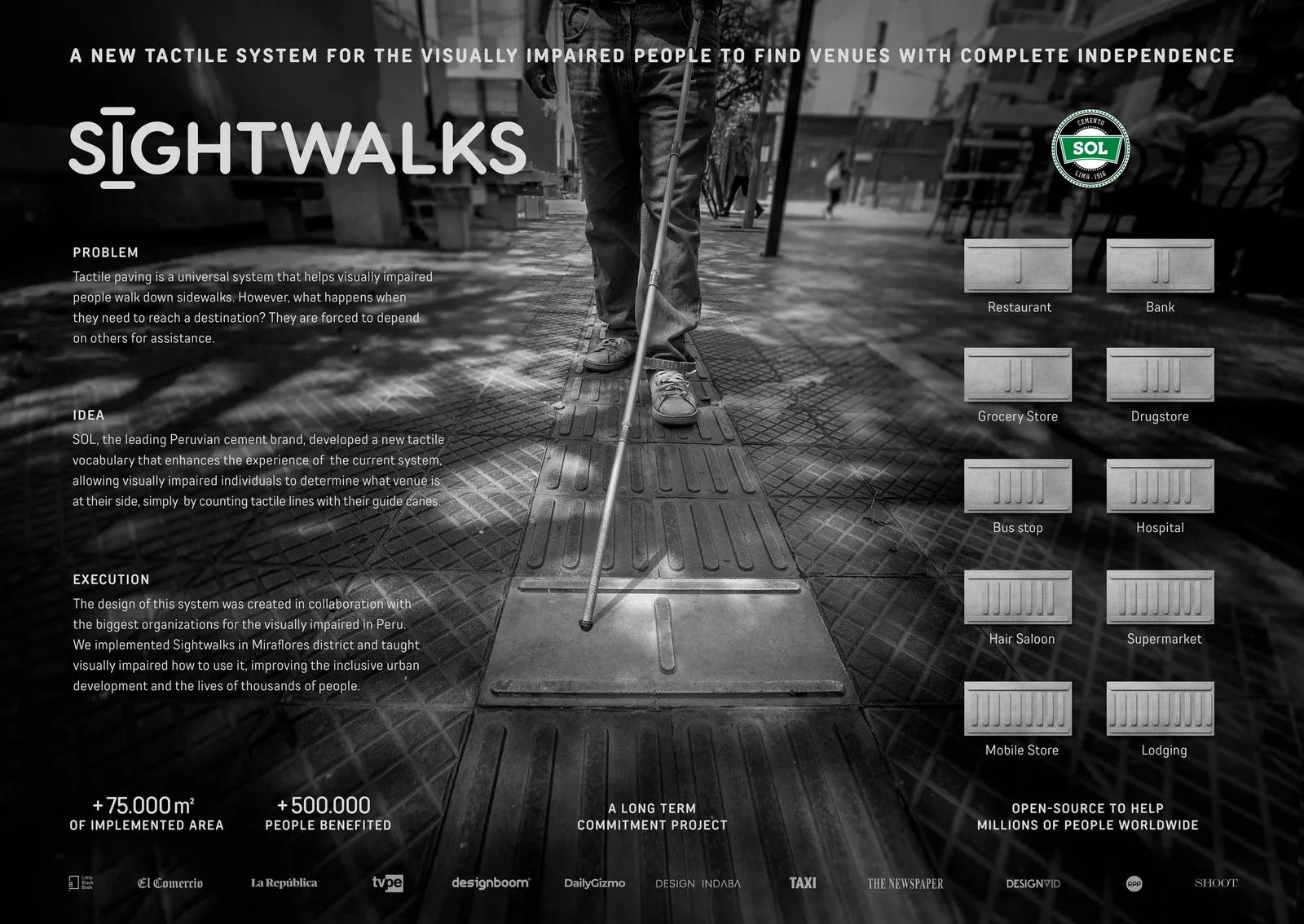
In partnership with leading organizations for the visually impaired, the Circus Grey team developed a new tactile vocabulary. A system based on universal patterns, easy to learn, and fully functional without any digital technology.
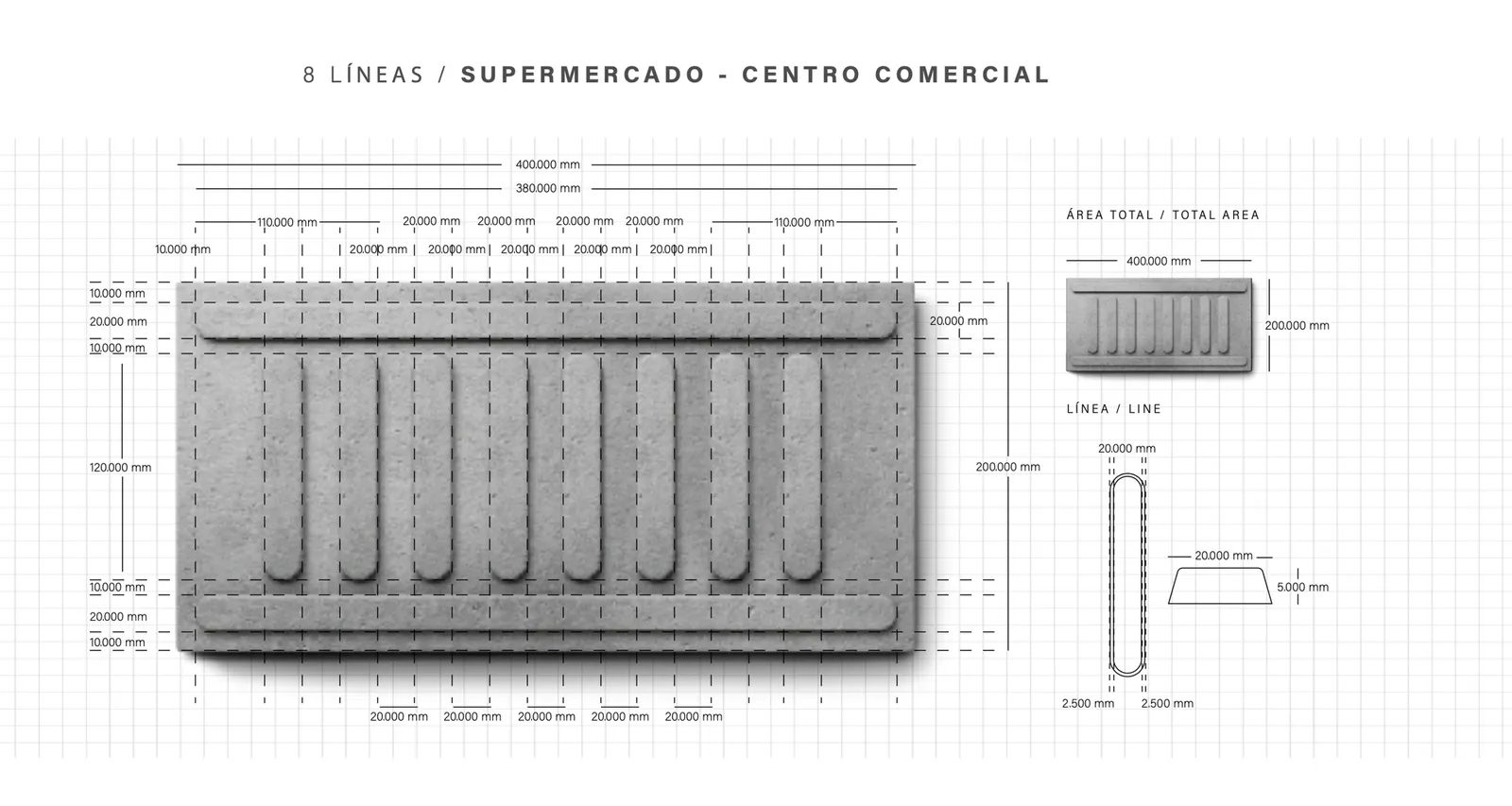
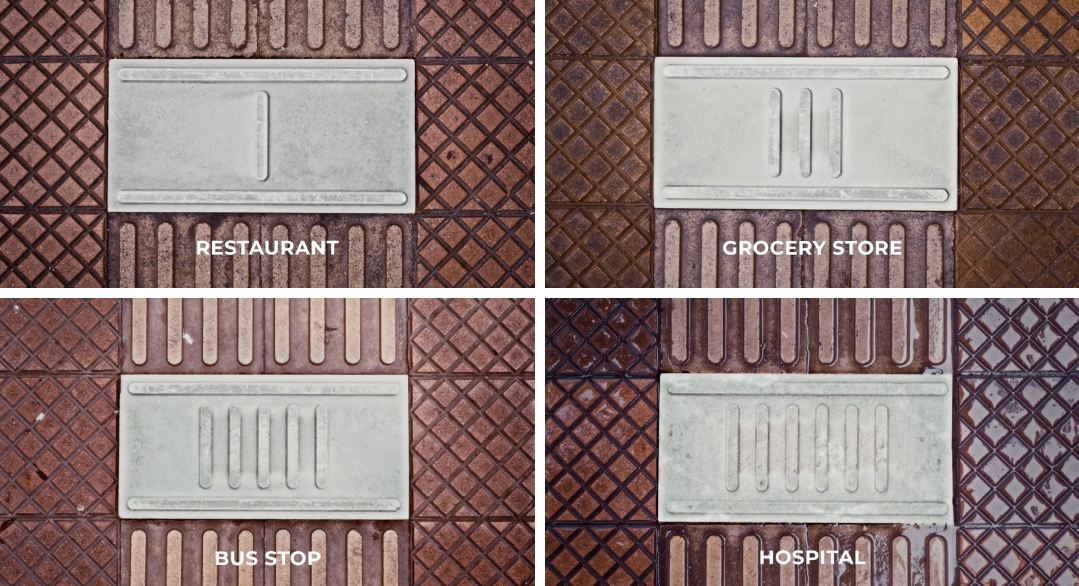
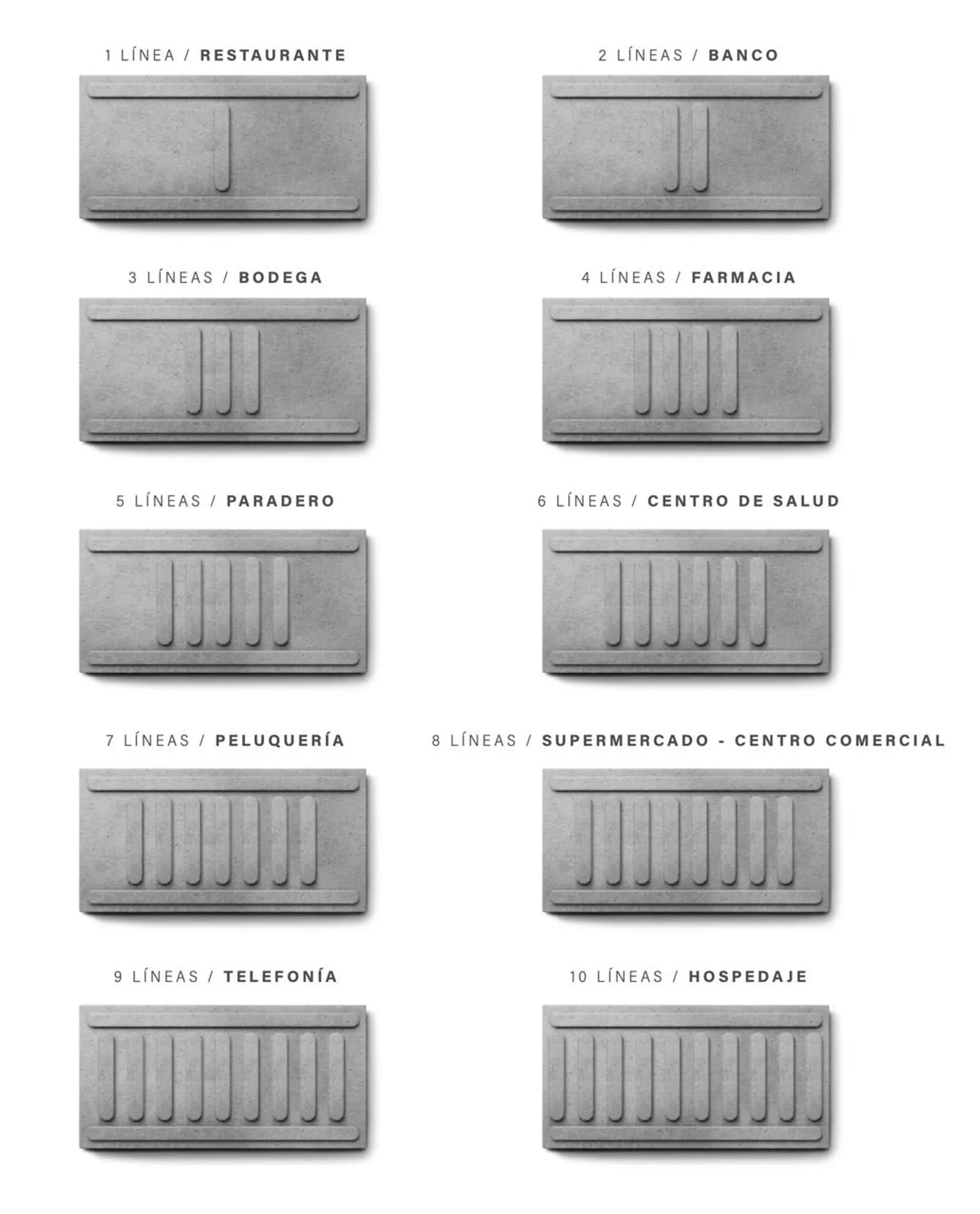
Here’s how the system works:
- A horizontal strip signals the presence of important information.
- Next to it, raised vertical lines appear.
- The number of lines indicates the type of service:
- 1 line: restaurant
- 2 lines: bank
- 3 lines: pharmacy
- and so on.
With a cane, people with visual disabilities can identify what type of establishment is beside them—no need to ask or rely on others. It’s information design made physical. It’s urban UX. It’s communication without words.
Design as Language: When Form Communicates
From a graphic design and visual communication perspective, Sightwalks is a remarkable example of how a system can function as a language. There are no visible logos, no slogans, no explicit messages. Communication happens through touch, movement, repetition, and gradual learning.
This approach places the project at the intersection of:
- system graphic design,
- inclusive wayfinding,
- user experience design,
- social communication,
- and urban activation.
For any communications agency or design studio in Barcelona, Sightwalks prompts a key reflection: communication doesn’t always need a screen. Sometimes, the best channel is the environment itself.
A Campaign Without Technology—And All the More Powerful for It
One of Sightwalks’ most significant aspects is its low-tech nature. In an era dominated by apps, AI, and complex digital solutions, this project takes the opposite route: simplicity, durability, and scalability.
It doesn’t require electricity, internet, or special devices. It works 24/7, in any weather, and integrates seamlessly into existing infrastructure. This is not just a technical decision, but a strategic one: it ensures the system can be rolled out at scale and maintained over time.
From a communications standpoint, this reinforces Cemento Sol’s brand message: a company building real solutions for everyone—not just those with access to advanced technology.
Real Impact: When Data Backs Up Design
Unlike many social campaigns, Sightwalks goes beyond raising awareness. The results are concrete and measurable:
- Over 75,000 m² of sidewalks implemented.
- More than 500,000 visually impaired people benefited.
- 70% increase in top-of-mind awareness for the Cemento Sol brand.
The project has also reignited public debate about the need for more inclusive cities in Peru, positioning Cemento Sol as a key player in the urban and social conversation.
Open Source: Design Meant to Be Shared
Another major strength of the project is its open source approach. The system’s designs and patents are openly available, allowing any city, institution, or organization to replicate it.
This decision turns the campaign into a long-term commitment. Sightwalks isn’t a one-off initiative, but a platform for change. From a branding perspective, this greatly enhances the brand’s credibility: it doesn’t claim ownership of the solution—it shares it.
For those of us working in brand strategy and communications, this approach shows how design can drive global impact without losing coherence or purpose.
International Recognition: A Campaign That Sets a Benchmark
The recognition Sightwalks has received is remarkable, even by international standards. The project has been awarded at:
- Cannes Lions (Grand Prix, Gold, Silver, and Bronze),
- D&AD (Yellow, Graphite, and Wood Pencils),
- Clio and Clio Health,
- The One Show,
- ANDYs,
- LIA,
- El Sol Festival,
- El Ojo de Iberoamérica.
This broad recognition—across graphic design, media, spatial, health, impact, and activation categories—confirms that Sightwalks doesn’t fit into a single discipline. It’s a truly integrated communication campaign.
Conclusion: When Design Stops Representing and Starts Acting
Sightwalks proves that design can be much more than an aesthetic or advertising tool. It can be infrastructure. It can be language. It can be autonomy.
From our perspective as a communications, branding, and design agency in Barcelona, this project stands as one of the clearest examples of how a communication campaign can integrate into real life and drive structural change. It doesn’t just talk about inclusion—it builds it.
In a world overwhelmed by messages, Sightwalks reminds us that sometimes the most powerful communication isn’t seen—it’s felt.
Credits
Project: Sightwalks
Brand: Cemento Sol
Client: UNACEM
Creative Agency / Design Agency: Circus Grey Peru
Partner Agencies: APOYO Comunicación, Dinamo
Production Company: Rebeca
Country: Peru
Year: 2025