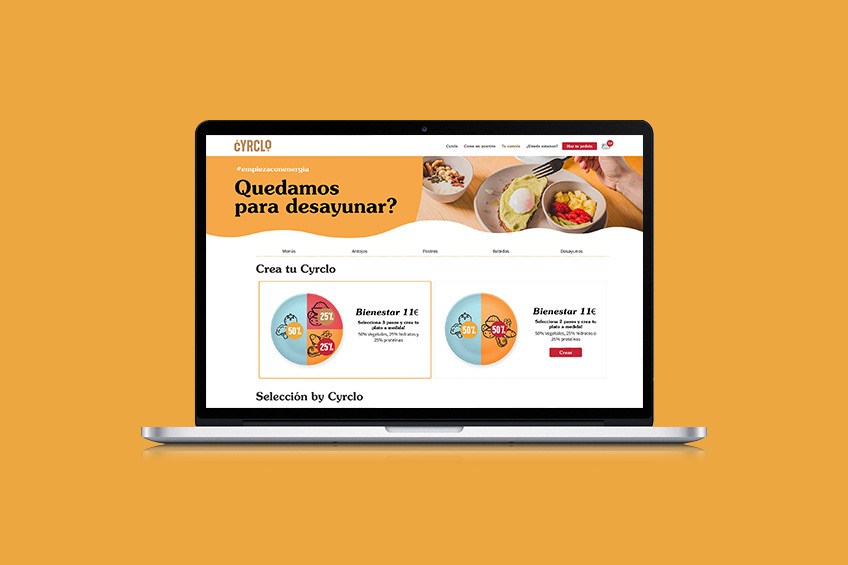
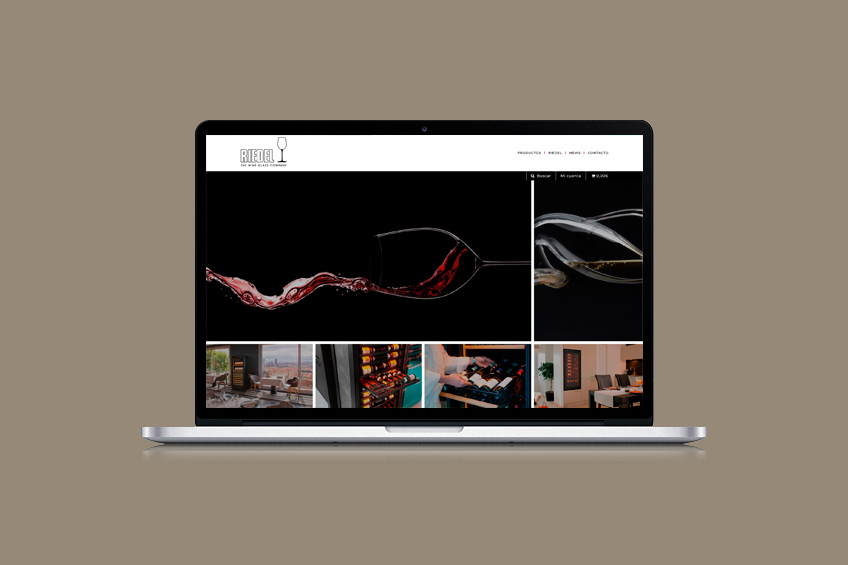
Our projects
code is a
promise of
quality
First in the process.
We analyse and optimise online stores to increase ecommerce conversion, reduce friction and obtain more value from existing traffic. CRO combines analytics, user behaviour, the buying experience and commercial goals.
We do not apply a generic checklist. We identify where opportunities are lost, formulate hypotheses and prioritise measurable improvements across product pages, navigation, cart and checkout.
A low conversion rate never has a single cause. It may reflect poorly qualified traffic, a proposition that is hard to understand, navigation problems, incomplete product pages, insufficient trust, unexpected costs or a checkout that creates too much friction. The first step is to separate symptoms from causes and understand how customers actually buy.
We review analytics configuration and data quality before drawing conclusions. We analyse the ecommerce funnel by device, channel, market, category and user type, as well as internal searches, products viewed, add-to-cart actions, checkout starts and purchases. We also look for measurement errors that could be hiding or duplicating conversions.
Quantitative analysis is combined with heuristic and qualitative review. We study architecture, menus, filters, search, categories, product pages, commercial messages, policies, trust elements and mobile behaviour. When data are available, we include session recordings, interaction maps, customer-service enquiries, returns, reviews and abandonment reasons to understand real objections.
The outcome is not an endless list of recommendations, but a diagnosis organised by problems, evidence and opportunities. Each finding should explain which part of the funnel is affected, which users experience the friction and the potential impact of resolving it.
When volume permits, we segment new and returning users, identified customers, campaigns, sources and cohorts. An overall average can conceal a problem limited to mobile, a particular category or paid traffic, so every conclusion must state the audience and context to which it applies.
We also assess traffic quality and consistency between advertising, content and landing pages. If the acquisition promise does not match the ecommerce information, changing a button or the checkout will not solve the underlying problem.
We turn the diagnosis into a backlog prioritised by expected impact, confidence and effort. Some improvements are quick, such as clarifying a message, reorganising information or correcting an error. Others require redesigning a template, changing checkout or working on the technology. Prioritisation prevents resources being spent on aesthetic changes with no clear relationship to the business.
We work on understanding the offer, navigation quality and reducing uncertainty. This may include content hierarchy, comparison tools, delivery and return information, availability, social proof, cross-selling, cart recovery or simpler forms. In every case, we define the problem being addressed and the indicator that will be used to evaluate the change.
When traffic volume allows it, we design A/B experiments with a hypothesis, a primary metric and decision criteria established in advance. If the sample is insufficient, we use qualitative validation, before-and-after analysis and segment monitoring instead of presenting random variations as statistical evidence.
CRO works best as a continuous process. After implementation, we review results, identify side effects and generate new hypotheses. If the platform limits the necessary improvements, we coordinate the work with ecommerce development or online store redesign, keeping measurement as the shared criterion.
We document every hypothesis with the problem, evidence, proposed change, audience, primary metric and risks. This discipline creates useful learning even when a test does not win and prevents ideas that were previously rejected from returning without context.
Alongside conversion, we monitor guardrails such as average order value, margin, returns, errors, speed and support contacts. A local improvement should not harm profitability or move friction to another part of the experience.
In large catalogues, conversion often depends on helping users find the right option. We review taxonomies, filters, sorting, no-result pages and search behaviour. On product pages, we analyse the proposition, images, variants, price, availability, content, recommendations and calls to action.
The solution must fit the type of purchase. An impulse product does not need the same information as a technical, configurable or high-value product.
We analyse searches with no results, the terms customers use, filter usage and paths between categories and products. These data help improve vocabulary, synonyms, ranking and merchandising and reveal demand the catalogue does not currently explain.
We study steps, fields, validation, registration, payment methods, shipping costs, coupons, errors and the mobile experience. The goal is not to remove essential information but to request it at the right moment and explain clearly what happens next.
We also review performance and stability because a slow page, a stock error or a failed payment can have more effect than any visual change.
We measure abandonment by step and distinguish commercial uncertainty from technical failure. Autocomplete, error messages, data recovery and payment compatibility are reviewed so a specific incident is not mistaken for a lack of purchase intent.
Not all conversions have the same value. We can incorporate margin, average order value, recurrence, returns and acquisition cost so optimisation does not focus solely on the number of orders. Selling more low-margin products may not be the right outcome.
We define a monitoring framework that relates experience, funnel and commercial performance, helping the team decide which initiatives should be developed first.
The backlog is shared with marketing, product and technology and assigns owners, effort and dependencies. This coordinates content, design, development and campaigns instead of leaving CRO as a parallel list that never reaches production.
Key details on methodology, investment and digital project development.
It is the systematic research and improvement of the shopping experience to generate more valuable purchases or actions from available traffic.
There is no universal figure. It varies by sector, price, device, market, traffic source and buying model.
Volume is needed for conclusive A/B tests, but not for data audits, error detection, qualitative research or justified improvements.
Depending on the project, we can use GA4, tag managers, heatmaps, recordings, surveys and experimentation tools.
It can. Some hypotheses involve content or configuration; others require changes to templates, functionality or checkout.
It depends on traffic, buying cycle and implementation complexity. Clear errors can improve quickly, while other hypotheses need more data.
Yes, provided data and implementation access are available. We work with WooCommerce and other ecommerce platforms.
We review your current situation and define the next step.
Contact now
We analyse your context, objectives and digital presence. We define the architecture and key priorities before design begins.
We create the visual identity and organise the content—always focusing on clarity, consistency and an optimal user experience.
We implement the project to high standards of performance and stability and, where needed, ensure integration with other systems.
We continuously monitor, optimise and improve your digital project to support its growth alongside your business.
We will review your current digital situation. We will get in touch to understand your context and jointly assess which areas to analyze, after which we will prepare an audit including key findings and recommendations.
We will analyse how your brand appears in ChatGPT and other AI agents, against which competitors and for which queries. We will contact you to understand the context and define the priority opportunities.