This time, I want to talk to you about Google Panda. For those already familiar with digital marketing, this might not be news—or maybe it is. But if you’re new to this world, you’ll find the following article especially interesting, because Google Panda is the name of the algorithm that Google uses to determine where your website appears in search results.
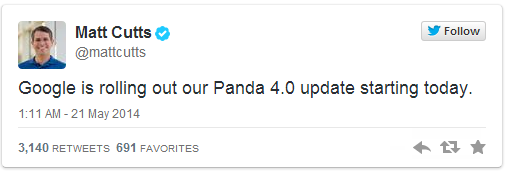
Matt Cutts’ announcement sent shockwaves through the SEO community
The last major algorithm update happened in 2014, when Matt Cutts announced the imminent release of Panda version 4.0. Believe me, at that moment, plenty of people started to panic, fearing an apocalyptic future for their websites if the algorithm didn’t work in their favor.
To put it in everyday terms, it was like suddenly moving your small shoe store from a bustling shopping mall to a deserted back alley. That’s the reality of the digital marketplace.
What actually happened back then was that many web design professionals received frantic calls from clients who saw their Google Analytics numbers plummet overnight.
But the truth is, this only happened to those who had pushed the limits and used techniques not approved by the algorithm.
There have always been ways to try to trick the algorithm, and that very trend has forced it to evolve.

So, while the changes introduced by Google Panda at that time weren’t radically different from previous updates, they were certainly much more effective.
In general, Google prioritizes high-quality, useful content and actively targets manipulative tactics that distort the SERPs (Search Engine Results Pages) with impressive efficiency.
An algorithm is a set of formulas and processes designed to turn questions into answers.
Every time you search for something, the search engine has thousands of websites it could show you, all potentially relevant to your query. The challenge is to refine those results and deliver the most accurate information as quickly as possible.
That’s why algorithms are constantly updated—to improve and fine-tune search results.
To get straight to the point, here’s what you need to keep in mind when designing a website:
- Create quality content – Posts and other text content over 800 words are valued most highly.
- Showcase your work – The reach and impact of your work are highly regarded.
- Local SEO is becoming increasingly important.
- Keywords should be used naturally—no more writing like a robot sending a telegram.
- Don’t overload your website with ads—it can be flagged as spam.
- Avoid duplicate content—originality is rewarded.
- Link building is allowed, but it must be done carefully.
- And finally, black hat techniques are under even greater scrutiny.
One thing that hasn’t changed is that earning reputable backlinks remains the fastest and most effective way to climb the rankings. However, Google now expects these links to generate some kind of social media feedback—otherwise, what’s the point of those links, right?
Another constant is the importance of building a great website, paying close attention to design, and ensuring proper development.
For all this and more, the best thing you can do is stay informed and find a skilled team of professionals to bring your project to life.