To deliver an optimal user experience, we first need to analyze and create an effective user interface. The user interface is the bridge that connects us with our users, enabling interaction with our website. That’s why good web design always includes a well-crafted user interface, or UI. This is the key to meaningful interaction with the person behind the screen, ensuring a positive user experience, or UX.
Web design through the years
To better understand how the web has evolved, just take a look at websites built before the year 2000. Constrained by low screen resolutions and outpaced by rapidly advancing technology that was still maturing, most of these sites offered a poor user experience.
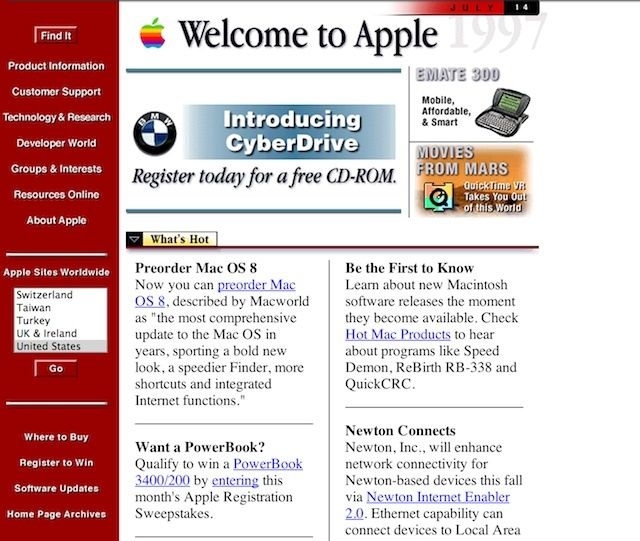
Fortunately, the days when browsing certain websites felt like starring in an Indiana Jones movie—overcoming obstacles just to reach your goal—are behind us.

Web design today
Today, things have changed for the better. The user is typically the client, and to treat clients well, we need to make their experience as smooth as possible. Let’s look at a few scenarios that compare online experiences to what happens when a customer walks into a store—helping us better understand user behavior.
Scenario 1
Online scenario: Due to poor web design, the user struggles to find or use the navigation menu. Frustrated, they leave our website.
Real-world equivalent: A customer arrives at our store, but the door handle doesn’t work, and if they manage to open it, the door is impossibly heavy. The customer gets frustrated and goes to the shop next door.
Scenario 2
Online scenario: The user manages to use the navigation menu, but poor site structure makes it hard to find what they’re looking for. Frustrated, they leave our website.
Real-world equivalent: The customer enters our store, but we’ve put chickpeas next to hardware washers, and beers with protein shakes (really!), making it impossible to find what they want. The customer gets frustrated and goes to the shop next door.
Scenario 3
Online scenario: The user lands on our website and is immediately hit with a pop-up advertising a “must-have” product. To close it, they have to click a tiny 1px by 1px ‘X’. Frustrated, they leave our website.
Real-world equivalent: The customer enters our store and is instantly confronted by an overly enthusiastic salesperson who launches into a non-stop sales pitch, not letting the customer get a word in. “Hello, I’m calling from Voñafone/Motristar/Ogrange”. The customer hangs up.
Scenario 4
Online scenario: The user starts browsing the website but finds it impossible to get their bearings. Going back to a page they found interesting is a real challenge—it’s a maze. Frustrated, they leave our website.
Real-world equivalent: IKEA
User experience: building a connection
We can build a relationship and be on the same side as our users. We can guide them easily to the product they’re looking for, answer their questions, and avoid being intrusive. All it takes is well-structured content and a clear navigation menu. We can go further—not only making our site easy to use, but also enjoyable, or even impressive, by presenting our services or products in innovative ways. This is how we create a strong brand image.