It’s surprisingly common to come across large companies that seem to pay little attention to their Corporate Identity. In this post, we’ll discuss the six most frequent mistakes businesses make when developing their Corporate Identity.
As designers, we regularly encounter companies with impressive structures and clear commercial success, yet their Corporate Identity is anything but solid. This can easily lead outsiders to question their professionalism—an impression that may be entirely undeserved.
That’s why having a Corporate Identity that reflects your level of professionalism is essential for any business, whether you’re a startup or an established company.
Below, we outline the six mistakes you should avoid when analyzing or creating your company’s Corporate Identity.
Building a strong Corporate Identity: The 6 mistakes you must avoid
1. Not hiring an expert to design your Corporate Identity
It’s clear that your Corporate Identity should be developed by a professional. This includes everything from your visual image and logo to the philosophy you want to convey.

All these elements should be reflected in your Corporate Identity so that your audience instantly “gets” what your company is about. Decide whether you want to communicate in a more formal tone or, on the contrary, present a friendlier, more relaxed image—both in your written and visual language.
2. Thinking the job is done once the logo is designed
Following on from the previous point, a common mistake is to believe that designing a logo is the end of the Corporate Identity process. In reality, it’s just the beginning. Your Corporate Identity should go much further, establishing a consistent visual style, the type of imagery that supports your design elements, the tone of voice you use, and guidelines for interacting with your clients.
This comprehensive approach will present your business as more professional and significantly enhance your brand value.
3. Not reviewing or updating your visual identity every few years
Here, we’re talking specifically about your visual identity—the full set of design elements. The logo is a central piece, as much of your visual identity will revolve around it.
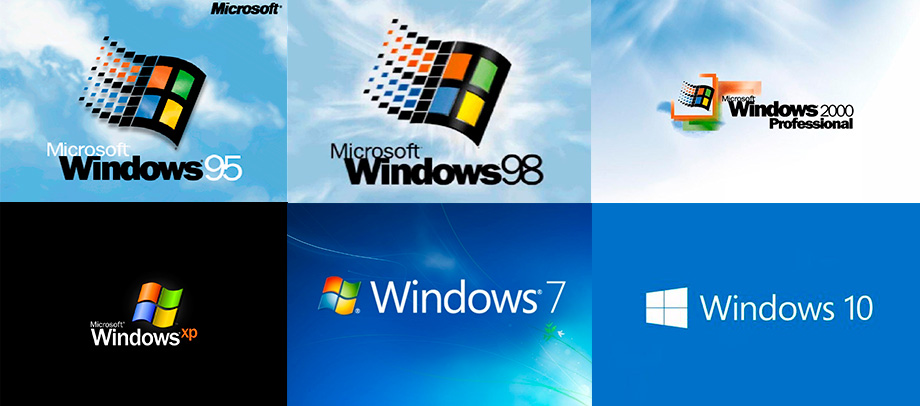
Your visual identity should be reviewed every few years to ensure it stays current. Often, a simple logo refresh, an update to your brand colors, or a new approach to imagery is all it takes.
Don’t be afraid to make changes—major brands do this all the time. Over the years, they’ve evolved their visual identities. Take Microsoft Windows, for example.
4. Neglecting your online reputation
This ranges from not having a quality website to letting your social media presence stagnate or failing to respond to user interactions.
When it comes to web design, your website is often the deciding factor for potential clients choosing between you and your competitors. The company that communicates best online often wins.
It’s astonishing how many poorly designed websites are out there—even among multinational companies with huge revenues. For them, investing in a strong online image would be minimal, yet many settle for a subpar presence. This isn’t just about attracting new clients; it’s also about respecting your existing ones.
As for social media, maintaining a good image is especially important if you’re targeting end consumers. Register your company on the main social platforms and keep them active—post content regularly, respond to comments, and engage with your audience.
If you don’t have the time, consider hiring a digital marketing agency to handle your community management.
5. Failing to align your Corporate Identity with your company values
As we’ve already mentioned, your Corporate Identity should be in sync with your company’s values. Before you define it, set clear guidelines for what you want to communicate, then build your Corporate Identity around those principles.

Do you want your company to convey elegance and luxury? If so, avoid casual language and opt for a more formal tone. Your color palette should reflect this as well—think gold, black, white—steering clear of loud or flashy colors.
On the other hand, if you want to project a more relaxed vibe, you can use bolder colors and playful contrasts. In both written and spoken communication, you can incorporate more informal language to create a “cool” and fresh image.
6. Not creating a Corporate Identity manual
A strong Corporate Identity should be fully documented in a brand manual. This manual outlines every aspect needed to maintain a consistent corporate image.
Your Corporate Identity manual should cover everything from the tone of voice and slogan to the vocabulary you use, as well as the guidelines for all graphic materials developed from your brand.
Visually, it should specify how the logo is to be used, minimum sizes, safe margins, color variations, and more.
It’s also helpful to include examples to illustrate each rule.