Thinking about launching your own website? Have you called design or development studios only to be bombarded with unfamiliar jargon?
In this article, we’ll break down everything you need to know about domain names, including:
- What is a domain name?
- Types of domain names
- How much does a domain name cost?
- How long does a domain last?
- How to register a domain name
- Which domain extension should you choose?
By the end, you’ll have all the knowledge you need.
How much does a domain name cost?
Let’s take it step by step. First, it’s important to understand what we mean when we talk about a domain name.
What is a domain name?
A domain name is the unique address that identifies a website on the internet and often indicates its category or purpose.
Simply put, your domain name is the name your website will have.
For example, Samsung’s domain is https://www.samsung.com/es/.
Samsung’s domain is www.samsung.com, and ours is www.codewebbarcelona.com.
So now you know: a domain name is simply the name of your website.
It’s also important to note that a domain name is not the same as hosting. Here’s the difference:
A domain name is the address of your website, while hosting is the service where your website’s files are stored.
Think of it like this: your company’s name = the domain, and your company’s office = the hosting.
You pay an annual fee for hosting to keep your website online.
Types of domain names
It’s also useful to know that there are different types of domain extensions.
Some common examples are .com, .es, .cat, .org, and so on.
Depending on your target region or audience, you might want to choose one extension over another.
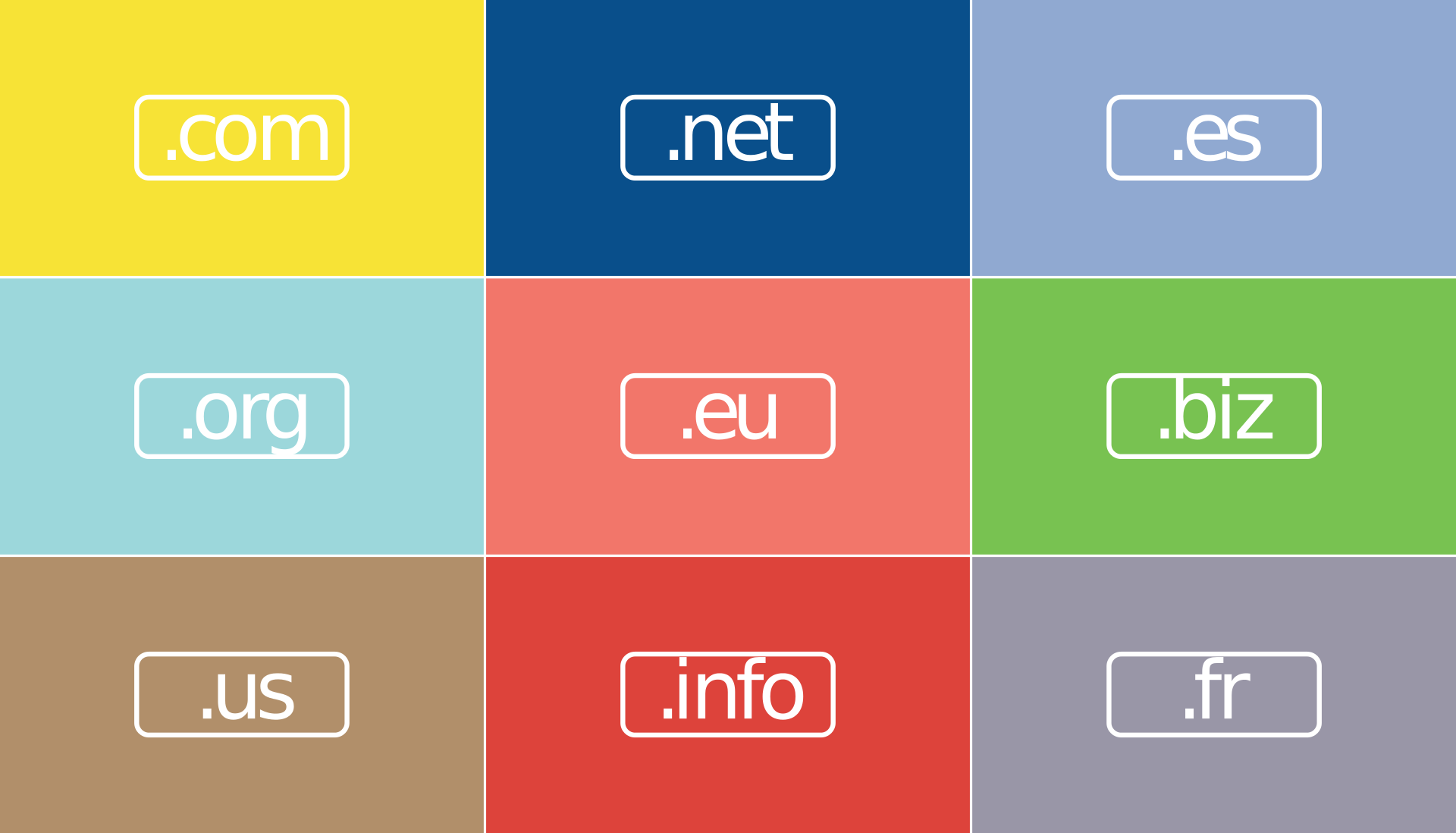
Which domain extension should you choose?
Most people go for a .com domain, as it’s international, but you can choose whichever extension best fits your market and goals.
How long does a domain last?
Like most things in the digital world, domains have a lifecycle.
When choosing a domain, you first need to check if it’s available.
If it is, you can purchase and register it.
Once registered, a domain is yours for a period between 1 and 10 years. During that time, no one else can use it.
It’s important to keep track of your domain’s expiration date—if you forget to renew it, someone else could buy it and try to resell it to you at a much higher price.
How to register a domain name
Usually, you don’t have to register a domain yourself. The same companies that provide web hosting will also handle domain registration for you.
It’s a straightforward process and not expensive, so don’t stress about it.
How much does a domain name cost?
Domain names typically start at around 10 euros per year, depending on the extension and availability. As mentioned above, the best approach is to check with hosting and domain providers for current prices.
Conclusion
Now you know everything you need about domain names. Next time the topic comes up, you’ll be ready—and you won’t be left wondering, “What on earth is this person talking about?”